Introduction
In a competitive market, customers are exposed to numerous brands offering similar products and services. Simply having a good product is not always enough. Businesses also need to communicate why their offering is different, relevant, and valuable to their target customers.
This is where positioning strategy becomes important.
Positioning is concerned with how a brand, product, or service is perceived in the mind of its target customers compared with competing alternatives.
For example, one brand may be associated with affordability, another with premium quality, another with innovation, and another with convenience. These associations form part of the brand's position in the customer's mind.
A well-designed positioning strategy helps a business communicate a clear value proposition and establish a meaningful identity in a competitive market.
What Is Positioning?
Positioning is the process of designing a company's offering and image to occupy a distinctive and meaningful place in the mind of the target customer.
In simple terms:
Positioning is about how you want customers to perceive your brand compared with competing alternatives.
For example, a company may want customers to associate its brand with:
Affordable prices
Premium quality
Innovation
Reliability
Convenience
Sustainability
Professional service
Superior performance
Positioning is therefore not simply about creating an attractive logo or slogan. It involves creating a consistent perception of the brand through its product, price, communication, customer experience, and overall value proposition.
Positioning in the STP Marketing Framework
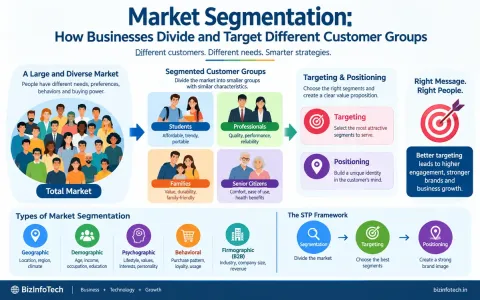
Positioning is the third stage of the STP marketing framework.
STP stands for:
S — Segmentation
T — Targeting
P — Positioning
The three stages are connected.
Segmentation
The business divides the broader market into meaningful customer groups.
Targeting
The business evaluates those groups and selects the customers it intends to serve.
Positioning
The business decides how it wants its offering to be perceived by those selected customers.
Therefore:
Segmentation → Targeting → Positioning
Positioning translates the decisions made during segmentation and targeting into a clear market proposition.
Why Is Positioning Important?
Positioning plays an important role in competitive marketing.
1. Creates Differentiation
Customers may have many alternatives available.
Positioning helps a business communicate how its offering differs from competitors.
For example, a company may differentiate itself through:
Better service
Lower price
Higher quality
Specialized expertise
Convenience
Innovation
Customization
2. Communicates Customer Value
A strong positioning strategy explains why customers should consider the offering.
Instead of simply describing product features, businesses can communicate the benefits and value that those features provide.
For example:
Feature: Fast delivery
Customer value: Customers receive their orders quickly and conveniently.
3. Builds Brand Associations
Repeated communication and consistent customer experiences can create associations with a brand.
A company may want customers to associate it with:
Trust
Quality
Innovation
Affordability
Professionalism
Convenience
These associations contribute to the brand's perceived position.
4. Supports Marketing Decisions
Positioning provides direction for the marketing mix.
A premium positioning strategy may require:
Premium product design
Higher service levels
Appropriate pricing
Selective distribution
Sophisticated communication
A value-oriented positioning strategy may require a different combination of product, pricing, distribution, and promotional decisions.
5. Helps Guide Communication
Once a company knows how it wants to be perceived, its communication can become more consistent.
Advertising, social media, website content, packaging, sales presentations, and customer service can communicate the same central value proposition.
Positioning vs Differentiation
Positioning and differentiation are closely related but are not identical.
Differentiation
Differentiation focuses on how an offering is made meaningfully different from competing alternatives.
Positioning
Positioning focuses on how that difference and value are communicated and perceived by the target customer.
For example:
A company may develop a website-building service specifically designed for small businesses.
The specialization is part of its differentiation.
If the company consistently communicates itself as a simple, affordable website solution for growing small businesses, that contributes to its positioning.
Thus:
Differentiation creates meaningful differences.
Positioning communicates and establishes those differences in the target customer's mind.
Key Elements of a Positioning Strategy
A positioning strategy generally involves several important elements.
1. Target Customer
The business must know whom it wants to serve.
Positioning cannot be developed effectively without understanding the target market.
2. Customer Need
The business should identify an important customer need or problem.
For example:
Saving time
Reducing cost
Improving convenience
Increasing productivity
Improving quality
Reducing risk
3. Value Proposition
The business should clearly communicate the value it offers.
A value proposition answers:
Why should the target customer choose this offering?
4. Competitive Frame of Reference
Customers usually compare an offering with alternatives.
Therefore, businesses should understand:
Who the competitors are
What alternatives customers have
What benefits competitors emphasize
How customers evaluate available options
5. Point of Difference
A business should identify meaningful characteristics that distinguish its offering.
A point of difference may be based on:
Product performance
Service
Price
Expertise
Technology
Convenience
Customization
Customer experience
6. Reason to Believe
A positioning claim should be supported by something credible.
For example, a company claiming specialized expertise should be able to demonstrate that expertise through:
Experience
Certifications
Case studies
Demonstrations
Customer feedback
Product performance
A strong position is easier to maintain when the promised value is supported by actual business capabilities.
Types of Positioning Strategies
Businesses can position their products and brands in different ways.
1. Price-Based Positioning
A company can position itself around affordability or value for money.
The focus may be:
Competitive price
Low total cost
Affordable packages
Value-oriented offerings
This approach is common in price-sensitive markets.
However, businesses need to ensure that lower prices do not create an unintended perception of poor quality.
2. Quality-Based Positioning
A company may position its offering around quality or superior performance.
The positioning may emphasize:
Product quality
Reliability
Durability
Performance
Service standards
This strategy is often associated with premium or quality-conscious customer segments.
3. Benefit-Based Positioning
Here, the brand emphasizes a specific customer benefit.
For example:
Saves time
Improves productivity
Provides convenience
Reduces effort
Improves security
The focus is on the value the customer receives.
4. User-Based Positioning
A company may position its offering for a particular type of user.
Examples include products specifically designed for:
Students
Professionals
Parents
Athletes
Small-business owners
Enterprise customers
The product may become strongly associated with the intended user group.
5. Use or Application-Based Positioning
A product can be positioned around a specific use or situation.
For example, a software product may be positioned as:
A productivity solution
A project management tool
A customer relationship solution
An accounting solution
The positioning emphasizes the application or problem being addressed.
6. Competitor-Based Positioning
A business may position its offering in relation to competing alternatives.
The communication might emphasize a particular difference such as:
Easier to use
More specialized
More flexible
More convenient
Businesses should ensure that competitor comparisons are accurate and appropriately supported.
7. Lifestyle-Based Positioning
Some brands position themselves around particular lifestyles, values, interests, or aspirations.
For example, a brand may associate itself with:
Fitness
Adventure
Sustainability
Professional success
Creativity
Convenience
This approach connects the brand with broader customer identities and lifestyles.
8. Niche Positioning
A business may focus on a specialized customer group or specific problem.
For example, instead of offering generic accounting software, a company might specialize in solutions for a particular type of business.
Niche positioning can help smaller businesses establish specialized expertise.
How to Develop a Positioning Strategy
Positioning should be developed systematically rather than relying only on slogans or advertising ideas.
Step 1: Understand the Target Market
Start by understanding the customers selected during the targeting process.
Study:
Needs
Problems
Preferences
Buying behavior
Expectations
Alternatives
Step 2: Analyze Competitors
Study how competing brands are positioned.
Ask:
What benefits do they emphasize?
What customer groups do they target?
What price levels do they use?
What makes them different?
How do customers perceive them?
Competitor analysis helps identify potential opportunities for differentiation.
Step 3: Identify Customer Needs
Determine which customer problems are important and insufficiently addressed.
Not every possible difference creates meaningful value.
The positioning should be based on something customers actually care about.
Step 4: Identify Points of Difference
Determine what the business can offer that is:
Relevant
Meaningful
Distinctive
Credible
Sustainable
Possible differences include:
Price
Quality
Features
Service
Expertise
Technology
Convenience
Customer experience
Step 5: Develop a Value Proposition
The business should summarize the value it intends to provide to the target customer.
A useful positioning statement can be structured around:
For [target customer], our [product/service] provides [key benefit] because [reason to believe].
For example:
For small businesses that need a professional online presence, our website development service provides practical and affordable websites designed around their business goals.
This is only an illustrative positioning statement; an actual business should develop its statement based on its research and capabilities.
Step 6: Communicate the Position Consistently
The chosen position should be reflected across customer touchpoints.
These may include:
Website
Advertising
Social media
Packaging
Sales presentations
Customer service
Product design
Consistency helps reinforce the intended brand perception.
Step 7: Deliver the Promised Value
Positioning is not only communication.
If a business claims to provide excellent service but customers consistently experience poor service, the intended positioning may not match actual customer perception.
Therefore:
Positioning promise + Actual customer experience = Brand perception
Step 8: Monitor Customer Perception
Businesses should periodically examine whether customers actually perceive the brand as intended.
They can use:
Customer surveys
Reviews
Feedback
Social media discussions
Sales data
Brand research
Customer interviews
Positioning may need adjustment as customer expectations and competitive conditions change.
Positioning Statement
A positioning statement is a concise description of how a brand wants its offering to be perceived by its target customers.
A common structure is:
For [target market], [brand/product] is a [category] that [key benefit] because [reason to believe].
For example:
For small businesses seeking to establish an online presence, Brand X is a website development service that provides practical business-focused websites because it combines professional design with business-oriented functionality.
A positioning statement is generally an internal strategic tool. It can guide marketing communication without necessarily being presented publicly in exactly the same wording.
Perceptual Mapping and Positioning
A perceptual map is a visual tool used to understand how customers perceive competing brands or products along selected dimensions.
For example, automobile brands could potentially be mapped using dimensions such as:
Price: Low → High
Perceived performance: Low → High
A perceptual map may help marketers identify:
Existing competitive positions
Areas of high competition
Potential gaps
Customer perceptions
Possible positioning opportunities
However, the dimensions used should be based on meaningful customer perceptions rather than assumptions.
Example of a Positioning Strategy
Consider a company that provides website development services.
Its target market might include:
Small businesses and professional service providers.
The company could identify common customer problems:
Outdated websites
Poor mobile experience
Lack of online credibility
Difficulty generating enquiries
Limited technical knowledge
It might then position its service around:
Professional, business-focused websites designed to establish credibility and support customer enquiries.
The positioning could be reflected through:
Website
Clear business-focused service pages.
Content
Articles explaining how websites support business growth.
Pricing
Packages designed for the target customer group.
Communication
Messages focused on business outcomes rather than technical jargon.
Customer Experience
Guidance throughout the website development process.
This demonstrates how positioning can influence the entire marketing mix.
Positioning and the Marketing Mix
Positioning does not exist independently of the marketing mix.
Product
The product should deliver the benefits promised by the positioning.
Price
Pricing should be consistent with the perceived value and intended market position.
Place
Distribution should make the product available through channels appropriate for the target customer.
Promotion
Communication should reinforce the desired perception.
For example, a premium positioning strategy may be weakened if the product experience, service quality, or communication consistently suggests low value.
Positioning in Digital Marketing
Digital channels have made brand positioning increasingly visible.
A customer may interact with a business through:
Google Search
Website
Social media
YouTube
Online reviews
Digital advertising
Every interaction contributes to the customer's perception of the business.
For example, a company positioning itself as a professional technology provider should maintain consistency across:
Website design
Content quality
Social media communication
Customer service
Technical presentation
Digital positioning is therefore not limited to advertisements.
Positioning and SEO
Positioning can also influence SEO and content strategy.
Suppose a business wants to be recognized as an expert in digital transformation for small businesses.
Its content strategy could consistently address topics such as:
Business digital transformation
Website development
Online customer acquisition
SEO
Digital marketing
Business automation
E-commerce transformation
Over time, consistent content can help communicate the areas in which the business wants to establish expertise.
However, SEO visibility and brand positioning are not the same thing. Search rankings depend on many factors, while positioning concerns the broader perception and value association of the brand.
Positioning and Customer Perception
An important distinction exists between intended positioning and actual customer perception.
Intended Positioning
How the company wants customers to perceive the brand.
Perceived Positioning
How customers actually perceive the brand.
These two may not always be identical.
For example:
A company may intend to position itself as a premium service provider.
However, if customers primarily associate the company with low prices, there is a gap between intended and perceived positioning.
This is why customer research and feedback are important.
Common Positioning Mistakes
Businesses can weaken their positioning through several common mistakes.
1. Positioning for Everyone
Trying to appeal to everyone can make a brand's message vague.
2. Making Too Many Claims
A business that claims to be the cheapest, highest quality, fastest, most innovative, and most personalized may lack a clear central position.
3. Choosing an Irrelevant Difference
A difference matters only if it is meaningful to the target customer.
4. Making Unsupported Claims
A positioning claim should be credible and supported by the actual offering.
5. Inconsistent Communication
If different channels communicate completely different messages, customers may develop an unclear perception.
6. Failing to Deliver the Promise
A strong slogan cannot compensate for a poor customer experience.
7. Copying Competitors
Simply imitating competitors makes it difficult to establish a distinctive identity.
8. Ignoring Changing Customer Expectations
Customer needs, technology, and competition change over time.
Positioning should therefore be reviewed periodically.
Repositioning: When a Brand Changes Its Position
Sometimes an existing position no longer matches market conditions or business objectives.
Repositioning is the process of changing how a product, service, or brand is perceived in the market.
Businesses may consider repositioning because of:
Changing customer preferences
New competitors
Technological developments
Declining demand
Changes in business strategy
New product capabilities
Changes in the company's target market
For example, a company previously known mainly for one product category may expand into another category and need to communicate a broader value proposition.
Repositioning should be supported by changes in the actual offering and customer experience when necessary. Simply changing promotional language may not be sufficient.
Positioning vs Branding
Positioning and branding are related but different.
Positioning
Focuses on the specific place and perception the business seeks to establish relative to alternatives.
Branding
Encompasses the broader identity and associations of the business, including:
Name
Visual identity
Brand personality
Communication
Customer experience
Reputation
Brand associations
Positioning is therefore an important component of broader brand strategy.
Positioning vs Targeting
These concepts should also be distinguished.
Targeting
Answers:
"Whom do we want to serve?"
Positioning
Answers:
"How do we want to be perceived by those customers?"
For example:
Target market: Small-business owners.
Positioning: A practical website solution designed to help small businesses establish a professional online presence.
Thus, targeting identifies the customer group, while positioning defines the intended perception and value proposition.
How to Build a Strong Position in the Customer's Mind
A strong position generally requires consistency across several areas.
1. Understand the Customer
Know what the target customer values.
2. Identify a Meaningful Difference
Find something relevant that distinguishes the offering.
3. Communicate Clearly
Avoid unnecessarily complicated messages.
4. Support the Claim
The business should have evidence or capabilities that support its positioning.
5. Deliver Consistently
The actual customer experience should match the promise.
6. Reinforce the Position
Repeat the core value proposition consistently across appropriate channels.
7. Monitor Perception
Use feedback and research to understand how customers actually perceive the brand.
Frequently Asked Questions
What is positioning in marketing?
Positioning is the process of creating a distinctive and meaningful place for a product, service, or brand in the mind of its target customers relative to competing alternatives.
Why is positioning important?
Positioning helps businesses differentiate their offerings, communicate customer value, guide marketing decisions, and build consistent brand associations.
What is a positioning strategy?
A positioning strategy is a planned approach for establishing how a product, service, or brand should be perceived by its target customers.
What are the common types of positioning?
Common approaches include:
Price-based positioning
Quality-based positioning
Benefit-based positioning
User-based positioning
Use-based positioning
Competitor-based positioning
Lifestyle-based positioning
Niche positioning
What is a positioning statement?
A positioning statement is a concise description of the target customer, category, key benefit, and reason why the offering can credibly deliver that benefit.
What is the difference between positioning and differentiation?
Differentiation concerns meaningful differences in the offering, while positioning concerns how those differences and the overall value proposition are established in the target customer's perception.
What is repositioning?
Repositioning involves changing the way an existing product, service, or brand is perceived in the market.
Is positioning only about advertising?
No. Positioning is broader than advertising. Product quality, pricing, distribution, customer service, website experience, and other customer interactions can all influence positioning.
Conclusion
Positioning is the third and final stage of the STP marketing framework, following segmentation and target market selection.
While segmentation helps businesses understand different customer groups and targeting helps them choose which groups to serve, positioning focuses on how the business wants its offering to be perceived by those customers.
An effective positioning strategy should be based on a clear understanding of customer needs, meaningful differentiation, competitive alternatives, credible value, and consistent delivery.
Businesses should remember that positioning is not simply a slogan or advertising message. It is the overall perception created through the relationship between what a business promises, communicates, and actually delivers.
In a competitive marketplace, a clear position can help customers understand:
Who the business serves → What it offers → What value it provides → Why it is relevant
Key Takeaway
Segmentation → Identify customer groups
Targeting → Select the customers to serve
Positioning → Establish how the offering should be perceived
Together, these three stages form the foundation of the STP marketing strategy and provide a structured approach for developing a customer-focused marketing strategy.
Related articles:-
Target Market Selection: How to Choose the Right Customers
Market Segmentation: How Businesses Divide and Target Different Customer Groups
Marketing Environment: Micro and Macro Factors That Influence Business Decisions
What Is Marketing Management? Definition, Importance, Functions and Process