Introduction
Pricing is one of the most important decisions in marketing and business management. A product may have excellent features, strong distribution, and effective promotion, but an inappropriate price can negatively affect sales, profitability, and customer perception.
Pricing strategy refers to the approach a business uses to determine the price of its products or services. The decision involves considering several factors, including production costs, customer value, demand, competition, business objectives, distribution channels, and the overall economic environment.
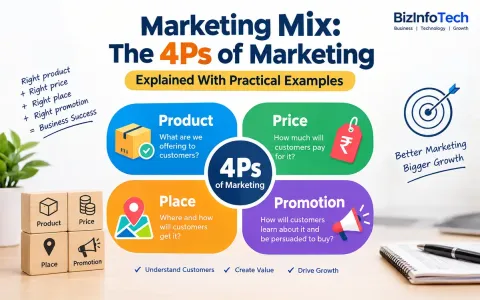
Price is also one of the traditional 4Ps of the marketing mix, along with Product, Place, and Promotion. Unlike many other marketing-mix elements, price directly generates revenue for the organization. Therefore, pricing decisions need to balance customer value with the financial objectives of the business.
In this article, we will discuss the meaning of pricing strategy, its objectives, major pricing methods, important factors influencing pricing decisions, and common pricing strategies used by businesses.
What Is Pricing?
Pricing is the process of determining the amount of money or other value that customers are required to exchange to obtain a product or service.
In simple terms:
Price is the amount a customer pays to obtain a product or service.
However, pricing is more than simply adding a profit margin to the cost of a product. Customers evaluate whether the price is justified by the benefits and value they expect to receive.
For example, two smartphones may have similar basic functions but may be sold at significantly different prices because of differences in brand image, design, features, service, perceived quality, and customer value.
Therefore, an effective pricing decision should consider both the seller's costs and the customer's perceived value.
What Is Pricing Strategy?
Pricing strategy is the systematic approach used by a business to determine, establish, and adjust the price of its products or services to achieve specific business and marketing objectives.
A pricing strategy helps answer questions such as:
How much should the product cost?
What are customers willing to pay?
What price are competitors charging?
What level of profit does the company want?
Should the company enter the market with a high or low price?
Should discounts be offered?
How should the price change during different stages of the product life cycle?
Pricing decisions should be consistent with the company's overall marketing strategy, target market, positioning, and other elements of the marketing mix.
Importance of Pricing Strategy
A well-designed pricing strategy is important for several reasons.
1. Generates Revenue
Price is the primary revenue-generating element of the marketing mix. The amount charged and the number of units sold determine sales revenue.
2. Influences Profitability
Price directly affects the organization's revenue and, after costs are considered, its profit.
3. Creates Customer Value
Customers compare the price of a product with the benefits they expect to receive. A suitable price can strengthen the perceived value of an offering.
4. Influences Market Positioning
Price can communicate information about a product's positioning. For example, a premium price may be associated with a premium or luxury positioning, while a low price may support a value-oriented positioning.
5. Affects Demand
Price and demand are closely related. Other things remaining equal, an increase in price generally leads to a decrease in quantity demanded, although the strength of this relationship varies by product and market.
6. Helps Achieve Marketing Objectives
Companies may use pricing to support objectives such as increasing sales volume, gaining market share, achieving a target return, or responding to competition.
Objectives of Pricing
Before deciding the actual price, a business should identify what it wants its pricing policy to accomplish.
Major pricing objectives include:
1. Profit Maximization
A company may set its price with the objective of maximizing profit while considering demand, costs, and competitive conditions.
The company attempts to find a price that generates sufficient revenue relative to its total costs.
Example:
A specialized software company may charge a premium price because its product provides significant value to business customers.
2. Sales Maximization
Some businesses focus on increasing sales volume rather than maximizing profit per unit.
A company may reduce its price to encourage customers to purchase more units.
Example:
A retailer may offer temporary discounts to increase the number of products sold during a particular period.
Sales-oriented pricing is recognized as a distinct pricing objective in marketing literature.
3. Market Share Growth
A business may use pricing to attract customers and increase its share of the target market.
For example, a new company may initially offer competitive prices to encourage customers to switch from established competitors.
4. Survival
During difficult competitive or economic conditions, a company may focus on survival.
The company may set prices at a level that helps it maintain sales, cover relevant costs, and continue operating.
5. Target Return on Investment
A company may establish a price with the objective of earning a predetermined return on its investment.
For example, a company investing heavily in a new product may calculate the price required to achieve a specific return over a defined period.
6. Customer Value
A company may set its price according to the value customers perceive in the product rather than relying only on production cost.
This approach is particularly relevant when a product offers unique benefits or strong differentiation.
7. Meeting Competition
A business may set its price with reference to competitors' prices.
The company may price its product:
Below competitors
Equal to competitors
Above competitors
The appropriate choice depends on the product's value proposition, market position, and competitive environment.
Major Pricing Methods
Pricing methods are approaches used by businesses to calculate or determine prices.
The major methods include cost-based pricing, demand-based pricing, value-based pricing, competition-based pricing, and target-return pricing.
1. Cost-Based Pricing
Cost-based pricing determines the selling price by adding a desired profit margin to the cost of producing or acquiring the product.
Formula:
Selling Price = Cost + Desired Profit Margin
Example:
Suppose the cost of producing a product is ₹500 and the company wants a 20% markup on cost.
Profit margin = ₹500 × 20% = ₹100
Therefore:
Selling Price = ₹500 + ₹100 = ₹600
Advantages
Simple to calculate
Easy to understand
Helps ensure that costs are considered
Useful when costs are relatively stable
Limitation
Cost-based pricing may ignore customer willingness to pay, demand conditions, and competitor prices. A price based only on cost may therefore fail to reflect the value customers attach to the product.
2. Markup Pricing
Markup pricing is a commonly used form of cost-oriented pricing.
A predetermined percentage is added to the cost of the product.
Formula:
Selling Price = Cost + Markup
For example, if a retailer purchases a product for ₹1,000 and applies a 25% markup:
Markup = ₹1,000 × 25% = ₹250
Selling Price = ₹1,250
Markup pricing is commonly used in retail and distribution businesses.
3. Break-Even Pricing
Break-even pricing aims to establish a price that allows the business to cover its total costs at a specified sales volume.
At the break-even point:
Total Revenue = Total Cost
Break-Even Quantity Formula:
Break-Even Quantity = Fixed Costs ÷ (Selling Price − Variable Cost per Unit)
For example, if:
Fixed costs = ₹1,00,000
Selling price per unit = ₹500
Variable cost per unit = ₹300
Then:
Break-even quantity = ₹1,00,000 ÷ (₹500 − ₹300)
= 500 units
The company must sell 500 units to cover its costs under these assumptions.
Break-even analysis is useful for understanding how price, cost, and sales volume interact.
4. Demand-Based Pricing
Demand-based pricing considers the level of customer demand when determining price.
When demand is strong, a company may be able to charge a higher price. When demand is weak, it may need to reduce the price or offer incentives.
The relationship between price and demand is often examined through the demand curve and price elasticity of demand.
Example
Hotel room prices may vary depending on demand during:
Festivals
Holidays
Major events
Peak tourist seasons
Off-season periods
5. Value-Based Pricing
Value-based pricing focuses primarily on the customer's perceived value of the product or service.
Instead of asking only:
"How much does it cost to produce?"
the company asks:
"How much value does this product provide to the customer?"
Example
A business software solution may cost significantly more than a basic software product because it can save companies substantial time and operating costs.
Value-based pricing therefore connects price with the benefits perceived by the target customer.
6. Competition-Based Pricing
Competition-based pricing considers the prices charged by competing businesses.
A company may choose to set its price:
Below competitors
At the same level
Above competitors
However, the company should also consider differences in product quality, features, brand reputation, service, and customer value.
Simply copying competitors' prices may not be appropriate when the company's offering is substantially different.
7. Target Return Pricing
Target return pricing determines the price required to achieve a specified return on investment.
Basic Concept:
Target Return = Desired Return on Investment
For example, if a company invests ₹10 lakh in developing a product and wants to achieve a predetermined return, it can estimate the sales volume and price necessary to reach that objective.
This approach requires reasonably accurate estimates of costs and expected sales volume.
Major Pricing Strategies
Pricing methods explain how a price may be calculated, while pricing strategies describe how the price is used to achieve broader marketing and business objectives.
Some important pricing strategies are:
1. Price Skimming Strategy
Under price skimming, a company initially charges a relatively high price for a new product and gradually reduces the price over time.
This strategy can be appropriate when:
The product is innovative
Customers are willing to pay a premium
Competition is initially limited
The company wants to recover development costs relatively quickly
OpenStax identifies price skimming as one of the major strategies for new products.
2. Penetration Pricing Strategy
Under penetration pricing, a company initially charges a relatively low price to attract customers and build sales volume or market presence.
This strategy may be considered when:
The market is price-sensitive
Competition is strong
Large sales volume is important
The company wants to encourage trial
The objective is often to establish a customer base and increase market presence.
3. Competitive Pricing
Under competitive pricing, the company considers competitors' prices when establishing its own price.
This approach is common in markets where customers can easily compare similar products.
4. Psychological Pricing
Psychological pricing considers how customers perceive prices.
Examples include:
₹999 instead of ₹1,000
₹4,999 instead of ₹5,000
Premium prices to support a luxury image
Such techniques attempt to influence customers' perceptions and responses to prices.
5. Bundle Pricing
Bundle pricing involves selling multiple products or services together at a combined price.
Example:
A software company may offer:
Basic software
Cloud storage
Customer support
as one package.
Bundle pricing can encourage customers to purchase multiple products together.
6. Promotional Pricing
Promotional pricing involves temporarily reducing prices or providing special offers to stimulate demand.
Examples include:
Seasonal discounts
Festival offers
Limited-period discounts
Coupons
Promotional sales
7. Premium Pricing
Premium pricing involves setting a relatively high price to support a premium positioning.
It is commonly associated with products that provide distinctive benefits, strong brand image, superior design, exclusivity, or specialized service.
However, a high price alone does not automatically create premium value. The product must provide sufficient perceived value to justify the price.
Factors Influencing Pricing Decisions
Pricing decisions are influenced by both internal and external factors.
Marketing literature commonly highlights considerations such as cost, customers, distribution channels, competition, and compatibility with the broader marketing strategy. External environmental conditions also influence pricing.
Internal Factors
1. Cost of Production
Production costs establish an important lower boundary for pricing decisions.
Costs may include:
Raw materials
Labour
Manufacturing
Packaging
Transportation
Marketing
Administration
Both fixed costs and variable costs should be considered.
2. Business Objectives
Pricing should support the organization's objectives.
For example, a company may focus on:
Profitability
Sales growth
Market share
Survival
Return on investment
Different objectives can lead to different pricing decisions.
3. Marketing Strategy
Pricing should be consistent with the company's overall marketing strategy.
A premium product, for example, may require a pricing approach consistent with premium positioning.
4. Product Characteristics
Product characteristics influence customers' willingness to pay.
Factors include:
Quality
Features
Design
Brand reputation
Differentiation
Product uniqueness
A highly differentiated product may have greater pricing flexibility than a standardized commodity.
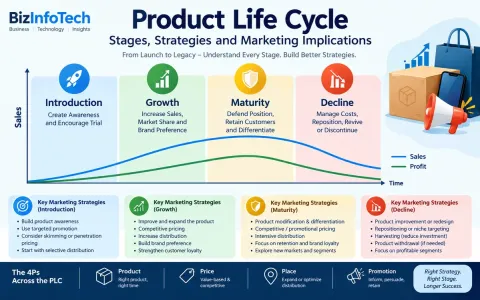
5. Product Life Cycle
Pricing decisions may change as the product moves through the stages of its life cycle:
Introduction
Growth
Maturity
Decline
For example, a new product may use skimming or penetration pricing during introduction, while pricing may be adjusted as competition and market conditions change.
6. Brand Image
A company's brand image can influence the price customers are willing to pay.
Strong brands may have greater ability to charge premium prices when customers perceive meaningful additional value.
7. Distribution Channel
Intermediaries such as wholesalers, distributors, and retailers influence pricing because each participant needs to cover costs and earn a margin.
Therefore, the company must consider the complete distribution structure before establishing the final price.
External Factors
1. Customer Demand
Customer demand is one of the most important external considerations.
The company should understand:
How many customers want the product
How much customers are willing to pay
How demand changes when price changes
Whether substitutes are available
2. Competition
Competitors' prices strongly influence pricing decisions, especially when products are similar and customers can easily compare alternatives.
A company should analyze competitors':
Prices
Product features
Quality
Discounts
Service
Brand positioning
3. Economic Conditions
The economic environment affects customers' purchasing power and willingness to spend.
Important economic factors include:
Inflation
Interest rates
Employment
Income levels
Consumer confidence
Economic growth
For example, during periods of inflation, businesses may face increased costs while customers may become more price-sensitive.
4. Government and Legal Regulations
Government policies and laws may affect pricing decisions.
Businesses may need to consider:
Taxes
Price regulations
Consumer protection laws
Competition laws
Industry-specific regulations
Therefore, pricing decisions must comply with applicable laws and regulations.
5. Technological Changes
Technology can affect both costs and customer value.
New technology may:
Reduce production costs
Create new products
Make existing products obsolete
Change customer expectations
Increase competition
Technological change is therefore an important part of the external pricing environment.
6. Social and Cultural Factors
Customer preferences are influenced by social and cultural changes.
For example, changing attitudes toward sustainability may increase demand for environmentally responsible products and influence customers' perceptions of value.
7. Availability of Substitutes
If many substitutes are available, customers may switch easily when a company's price increases.
For example, if several brands offer similar products, a significant price increase may cause customers to choose an alternative.
8. Market Structure
The structure of the market also influences pricing.
Different market structures include:
Perfect competition
Monopolistic competition
Oligopoly
Monopoly
The degree of competition and the availability of alternatives can affect the pricing freedom available to a business.
The Five Cs of Pricing
A useful framework for understanding pricing decisions is the Five Cs of Pricing:
1. Cost
What does it cost the company to produce and sell the product?
2. Customers
What value do customers perceive, and what are they willing to pay?
3. Channels
How do distribution intermediaries affect the final price?
4. Competition
What prices and value propositions are competitors offering?
5. Compatibility
Is the proposed price consistent with the company's overall marketing strategy and objectives?
These five considerations provide a useful framework for examining pricing decisions.
Steps in the Pricing Decision Process
A company can follow a systematic process when establishing a pricing policy.
Step 1: Determine Pricing Objectives
First, identify what the company wants to achieve through pricing.
Step 2: Estimate Demand
Estimate the quantity customers are likely to purchase at different price levels.
Step 3: Estimate Costs
Determine fixed, variable, and total costs.
Step 4: Analyze the External Environment
Study competition, economic conditions, regulations, technology, social factors, and other environmental influences.
Step 5: Select Pricing Method and Strategy
Choose an appropriate pricing method and strategy based on the objectives and market conditions.
Step 6: Set the Price
Establish the actual selling price.
Step 7: Monitor and Adjust
Pricing should not always be treated as a one-time decision. Businesses may need to adjust prices in response to changes in demand, costs, competition, economic conditions, and customer behavior.
This systematic approach is consistent with the pricing-policy process described in marketing literature.
Pricing Strategy Example
Consider a company launching a new fitness smartwatch.
The company identifies the following conditions:
Production cost: ₹3,000 per unit
Competitors' prices: ₹4,000–₹7,000
Target customers: young professionals
Product features: health tracking, GPS, notifications, and long battery life
Business objective: gain market share
The company would not necessarily set the price simply by adding a fixed percentage to ₹3,000.
Instead, it could consider:
Production and distribution costs
Competitors' prices
Customer willingness to pay
Product features and perceived value
Target market
Desired market position
Expected demand
Promotional costs
Distribution margins
Long-term business objectives
After evaluating these factors, the company might select a price that balances customer value, competitive conditions, costs, and its market-share objective.
This illustrates why pricing is a strategic marketing decision rather than merely an accounting calculation.
Common Pricing Mistakes Businesses Should Avoid
Businesses can make several mistakes when setting prices.
1. Focusing Only on Cost
Cost is important, but pricing only on the basis of cost can ignore customer value and competition.
2. Ignoring Customer Perception
Customers ultimately decide whether a price represents acceptable value.
3. Blindly Following Competitors
Matching competitors without understanding differences in product value can lead to inappropriate pricing.
4. Setting Prices Too Low
A very low price may reduce profitability and, in some markets, may even create doubts about quality.
5. Setting Prices Too High
An excessively high price may reduce demand if customers do not perceive sufficient additional value.
6. Ignoring Changes in the Market
Demand, costs, technology, competition, and economic conditions can change over time.
7. Inconsistent Pricing
Frequent or unexplained price changes can affect customer trust and brand perception.
Difference Between Pricing Method and Pricing Strategy
| Basis | Pricing Method | Pricing Strategy |
|---|---|---|
| Meaning | Approach used to determine the price | Overall approach used to achieve pricing and marketing objectives |
| Focus | Price calculation or determination | Strategic use of price |
| Examples | Cost-plus, value-based, competition-based | Penetration, skimming, premium, promotional |
| Main question | "How should the price be determined?" | "How should price be used to achieve business objectives?" |
| Orientation | More calculation-oriented | More strategic and market-oriented |
In practice, a business may combine a pricing method with a pricing strategy. For example, a company could calculate a price using cost and demand information and then use penetration pricing when entering a competitive market.
Pricing Strategy and the Marketing Mix
Price should not be considered independently of other marketing-mix decisions.
A company's:
Product determines what value is offered.
Price determines the monetary exchange for that value.
Place determines how the product reaches customers.
Promotion communicates the product's value and encourages purchase.
Therefore, pricing should be consistent with product positioning, distribution, and promotional activities. A price that conflicts with the overall positioning of a product can create confusion in the market.
Ethical Considerations in Pricing
Pricing decisions should also be made responsibly and in accordance with applicable laws.
Businesses should avoid practices such as:
Deceptive pricing
Misleading discounts
Illegal price fixing
Unfair or discriminatory pricing where prohibited
Exploitative pricing practices
Ethical pricing helps maintain customer trust and supports sustainable relationships between businesses and customers.
Conclusion
Pricing strategy is a critical component of marketing management and business decision-making. An effective pricing decision must balance the interests of the business with the value perceived by customers.
Businesses can use different pricing methods, including cost-based pricing, markup pricing, break-even pricing, demand-based pricing, value-based pricing, competition-based pricing, and target-return pricing. They can also adopt strategies such as price skimming, penetration pricing, competitive pricing, psychological pricing, bundle pricing, promotional pricing, and premium pricing.
Pricing decisions are influenced by a combination of internal and external factors, including cost, business objectives, product characteristics, customer demand, perceived value, competition, distribution channels, economic conditions, government regulations, technology, social factors, and product life cycle.
Ultimately, effective pricing is not simply about charging the highest or lowest possible price. It is about establishing a price that is consistent with the value offered to customers, market conditions, competitive environment, and objectives of the organization.
Frequently Asked Questions (FAQs)
What is pricing strategy?
Pricing strategy is the approach a business uses to determine and manage the prices of its products or services in order to achieve specific business and marketing objectives.
What are the main objectives of pricing?
Major pricing objectives include profit maximization, sales growth, market-share growth, survival, target return on investment, customer-value creation, and meeting competition.
What are the main pricing methods?
Major pricing methods include cost-based pricing, markup pricing, break-even pricing, demand-based pricing, value-based pricing, competition-based pricing, and target-return pricing.
What is cost-based pricing?
Cost-based pricing determines the price by adding a desired profit margin or markup to the cost of producing or acquiring a product.
What is value-based pricing?
Value-based pricing sets the price primarily according to the value customers perceive in a product or service rather than relying only on production costs.
What is penetration pricing?
Penetration pricing involves introducing a product at a relatively low price to attract customers, generate sales volume, or build market presence.
What is price skimming?
Price skimming involves initially charging a relatively high price for a new product and gradually reducing the price as the product moves through the market.
What factors influence pricing decisions?
Important factors include production costs, customer demand, perceived value, competition, business objectives, product characteristics, distribution channels, economic conditions, government regulations, technology, social factors, and the product life cycle.
Key Takeaways
Price is one of the 4Ps of the marketing mix.
Pricing directly influences revenue and profitability.
Pricing should consider both cost and customer value.
Pricing objectives may include profit, sales, market share, survival, or target return.
Common pricing methods include cost-based, demand-based, value-based, and competition-based pricing.
Price skimming starts with a relatively high introductory price.
Penetration pricing starts with a relatively low introductory price.
Customer demand and willingness to pay are important pricing considerations.
Competition can strongly influence pricing decisions.
Economic, technological, legal, social, and environmental factors can affect pricing.
Pricing should be consistent with the company's overall marketing strategy and positioning.
Pricing should be monitored and adjusted as market conditions change.
Related articles:-
Marketing Mix: The 4Ps of Marketing Explained With Examples
Market Segmentation: How Businesses Divide and Target Different Customer Groups
Target Market Selection: How to Choose the Right Customers
Positioning Strategy: How to Create a Strong Position in the Customer's Mind
What Is Marketing Management? Definition, Importance, Functions and Process
Consumer Behaviour: Understanding How Customers Make Buying Decisions
Product Life Cycle: Stages, Strategies and Marketing Implications