Introduction
Many businesses invest heavily in advertising, social media campaigns, and new technologies, yet still struggle to attract customers or achieve sustainable growth. The problem often isn't the budget—it's the marketing strategy itself.
Marketing is far more than promoting products or running advertisements. It is about understanding customer needs, delivering value, building lasting relationships, and adapting to changing market conditions.
Businesses that ignore these fundamentals often make the same critical mistakes repeatedly. These mistakes gradually reduce customer satisfaction, weaken competitive advantage, and limit long-term profitability.
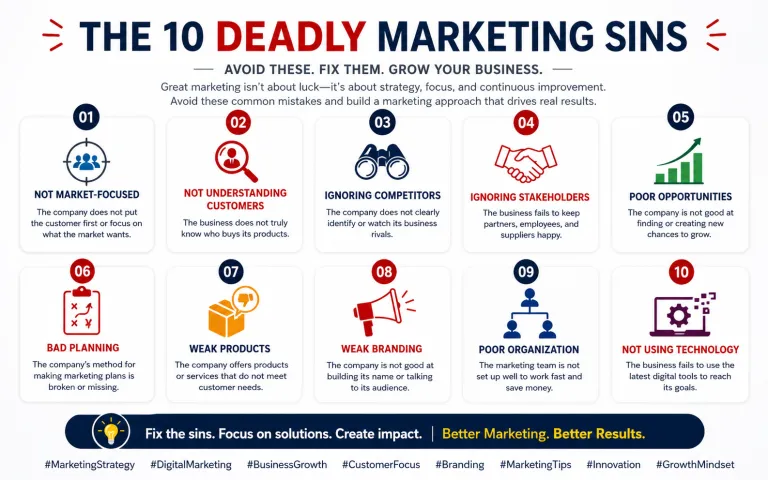
This article explores the 10 Deadly Marketing Sins that organizations commonly commit and provides practical strategies to overcome them.
1. Not Being Market-Focused
The Problem
Many companies design products based on internal assumptions rather than genuine market demand. They focus on what they want to sell instead of what customers actually need.
Why It Happens
Lack of market research
Overconfidence in existing products
Ignoring changing customer preferences
Focusing only on internal goals
Business Impact
Poor sales performance
Low customer engagement
High marketing costs
Product failure
How to Avoid It
Conduct regular market research.
Listen to customer feedback.
Study industry trends.
Build products around customer problems rather than company ideas.
2. Not Understanding Customers
The Problem
Some businesses know who buys their products but fail to understand why they buy, what motivates them, or what challenges they face.
Why It Matters
Customers expect personalized experiences and solutions that address their specific needs.
Warning Signs
Low customer retention
High bounce rates
Poor conversion rates
Negative reviews
Best Practices
Create customer personas.
Conduct surveys and interviews.
Analyze customer behavior.
Use CRM systems to understand purchasing patterns.
3. Ignoring Competitors
The Problem
Businesses often become so focused on their own operations that they fail to monitor competitors.
Risks
Competitors may:
Launch better products
Offer superior customer service
Reduce prices
Adopt innovative technologies
Solution
Perform regular competitor analysis by evaluating:
Pricing
Products
Marketing strategies
SEO performance
Customer reviews
Learning from competitors helps businesses improve without simply copying them.
4. Ignoring Stakeholders
The Problem
Successful businesses depend on more than customers. Employees, suppliers, investors, distributors, and business partners all contribute to long-term success.
Consequences
Ignoring stakeholders can result in:
Poor employee morale
Supply chain disruptions
Weak partnerships
Reduced productivity
Best Practices
Maintain transparent communication, recognize contributions, and build long-term relationships with everyone involved in the business ecosystem.
5. Missing Growth Opportunities
The Problem
Some companies become comfortable with existing products and overlook new opportunities.
Missed Opportunities Include
Emerging technologies
New customer segments
Digital transformation
International markets
Strategic partnerships
How to Improve
Develop a culture of innovation where teams continuously identify and evaluate new opportunities.
6. Poor Marketing Planning
The Problem
Without a structured marketing plan, businesses rely on random campaigns that produce inconsistent results.
Common Planning Mistakes
Undefined objectives
No target audience
Poor budgeting
No performance measurement
Effective Marketing Planning
Every marketing plan should define:
Goals
Target audience
Marketing channels
Budget
Timeline
Key Performance Indicators (KPIs)
Planning transforms marketing from guesswork into a measurable business function.
Guide on planning “Understanding Strategic Planning in the Tech Industry” and
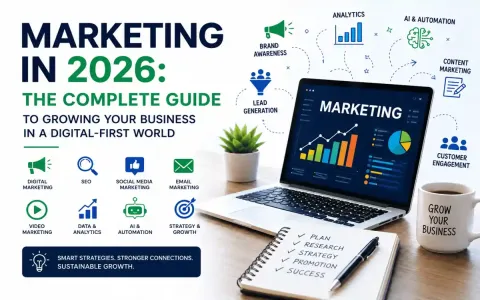
Marketing in 2026: The Complete Guide to Growing Your Business in a Digital-First World
7. Weak Products or Services
The Problem
Even the best marketing cannot compensate for products that fail to solve customer problems.
Indicators
High return rates
Frequent complaints
Poor online reviews
Low repeat purchases
Improvement Strategies
Continuously gather customer feedback, improve quality, add valuable features, and ensure your offerings solve real problems better than alternatives.
8. Weak Branding
The Problem
Branding is much more than a logo. It represents your company's identity, reputation, and promise to customers.
Weak Branding Leads To
Low recognition
Lack of trust
Poor customer loyalty
Difficult market positioning
Build a Strong Brand By
Maintaining consistent messaging
Creating valuable content
Delivering excellent customer experiences
Communicating a clear value proposition
Customers remember brands that consistently deliver value.
9. Poor Marketing Organization
The Problem
Marketing teams often struggle due to unclear roles, poor communication, or inefficient processes.
Typical Challenges
Delayed campaigns
Duplicate work
Inefficient resource allocation
Poor collaboration
Best Practices
Develop clear responsibilities, encourage collaboration between departments, and use project management tools to streamline workflows.
10. Not Leveraging Modern Technology
The Problem
Digital transformation has changed how businesses market, sell, and communicate with customers.
Companies that ignore technology risk falling behind.
Technologies Every Business Should Consider
Artificial Intelligence (AI)
Marketing Automation
Customer Relationship Management (CRM)
SEO Tools
Analytics Platforms
Email Marketing Software
Chatbots
Business Intelligence Dashboards
Technology enables businesses to make better decisions, automate repetitive tasks, and deliver more personalized customer experiences.
Explore further: How to Align Business Goals with Technology Strategy
How Artificial Intelligence Helps Eliminate These Marketing Sins
AI is transforming marketing by enabling businesses to make data-driven decisions.
Examples include:
Predicting customer behavior
Personalizing recommendations
Automating customer support
Generating content
Improving SEO
Optimizing advertising campaigns
Identifying emerging market trends
Rather than replacing marketers, AI enhances their ability to work more efficiently and strategically.
Discover How Generative AI is Transforming Digital Marketing Strategies
A Quick Marketing Health Check
Ask yourself the following questions:
✔ Do we regularly conduct market research?
✔ Do we truly understand our target audience?
✔ Are we monitoring competitors?
✔ Do we maintain strong relationships with stakeholders?
✔ Are we actively pursuing new opportunities?
✔ Do we have a documented marketing strategy?
✔ Do our products consistently satisfy customer needs?
✔ Is our brand clearly differentiated?
✔ Is our marketing team well organized?
✔ Are we using modern marketing technologies effectively?
If you answered "No" to several of these questions, your business has opportunities to strengthen its marketing strategy.
Final Thoughts
Marketing success is not achieved through a single campaign or advertising budget. It comes from consistently understanding customers, adapting to market changes, building meaningful relationships, and embracing innovation.
Avoiding these ten marketing sins allows businesses to strengthen customer trust, improve operational efficiency, and achieve sustainable growth in an increasingly competitive marketplace.
Whether you operate a startup, a small business, or a large enterprise, regularly reviewing these principles can help ensure your marketing efforts remain effective and future-ready.
Successful marketing isn't about selling more—it's about creating more value for the people you serve.