Introduction
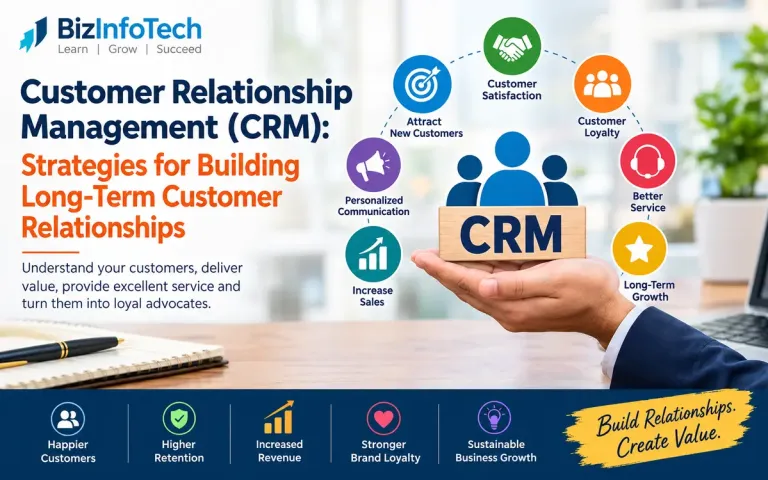
Customer Relationship Management (CRM) is an important part of modern marketing and business management. In highly competitive markets, attracting new customers is only one part of business growth. Businesses must also retain existing customers, understand their needs, provide excellent service, and develop relationships that encourage repeat purchases and customer loyalty.
CRM combines strategies, processes, customer data, communication, technology, and customer service to manage relationships throughout the customer lifecycle. A CRM system can record customer information and interactions, while a broader CRM strategy uses that information to improve customer experience, retention, loyalty, and business growth.
For businesses of all sizes—from local shops and service providers to e-commerce companies and large corporations—effective CRM can turn one-time buyers into repeat customers and long-term brand advocates.
What Is Customer Relationship Management?
Customer Relationship Management (CRM) refers to the systematic process of managing a company's interactions and relationships with current and potential customers.
In simple terms:
CRM is the process of understanding customers, managing interactions with them, satisfying their needs, and building long-term relationships that create value for both the customer and the business.
CRM involves much more than software. It includes:
Customer information management
Sales and lead management
Customer communication
Customer service
Customer feedback
Personalization
Customer retention
Loyalty programmes
Marketing communication
After-sales service
Data analysis
Modern CRM technology helps businesses bring customer interactions and data together across different touchpoints, including websites, sales conversations, service requests, email, chat, and social channels.
What Is a CRM System?
A CRM system is software that helps businesses collect, organize, manage, and analyze customer information and interactions.
For example, a CRM system may store:
Customer name
Contact information
Purchase history
Previous enquiries
Sales conversations
Complaints
Service requests
Preferences
Communication history
Follow-up dates
Customer feedback
Instead of maintaining customer information in separate notebooks, spreadsheets, emails, or messaging applications, a CRM system can provide employees with a more centralized view of customer interactions.
However, CRM strategy and CRM software are not the same thing.
CRM strategy = how a business manages customer relationships.
CRM software = technology used to support that strategy.
Why Is Customer Relationship Management Important?
CRM is important because customers have many choices. A business cannot depend only on product quality or low prices. Customers also consider:
Service quality
Convenience
Communication
Trust
Responsiveness
Personalization
Problem resolution
Overall customer experience
A strong relationship can encourage customers to remain with a business even when competitors offer alternatives.
Customer retention is particularly important because loyal customers may make repeat purchases, provide referrals, and contribute to customer lifetime value.
Major benefits of CRM include:
Improved customer satisfaction
Higher customer retention
Increased customer loyalty
Better customer service
More personalized communication
Improved sales performance
Better customer data management
Increased repeat purchases
More effective cross-selling and upselling
Better understanding of customer needs
Stronger brand relationships
Improved decision-making
Objectives of Customer Relationship Management
The major objectives of CRM are:
1. Acquire New Customers
CRM helps businesses manage prospects and leads from the first interaction through the sales process.
2. Retain Existing Customers
The objective is not simply to make a sale but to encourage customers to continue purchasing from the business.
3. Improve Customer Satisfaction
Businesses can use customer information and feedback to identify problems and improve service.
4. Build Customer Loyalty
Consistent value, personalized communication, rewards, and excellent service can strengthen customer loyalty.
5. Increase Customer Lifetime Value
Businesses can increase the value generated from a customer through repeat purchases, appropriate cross-selling, and upselling.
6. Improve Customer Service
CRM helps employees access relevant customer information and previous interaction history, allowing them to provide more informed assistance.
7. Increase Sales and Profitability
Strong customer relationships can generate repeat business, referrals, and opportunities to sell additional products or services.
Customer Relationship Management Process
CRM can be viewed as a continuous process rather than a one-time activity.
The basic CRM process is:
Customer Identification → Customer Acquisition → Customer Development → Customer Retention → Customer Loyalty → Customer Advocacy
Let's understand these stages.
1. Customer Identification
The first step is understanding who the target customers are.
Businesses may study:
Demographics
Income
Location
Buying behaviour
Preferences
Problems
Needs
Interests
Purchase frequency
This information helps businesses understand whom they are serving.
2. Customer Acquisition
After identifying target customers, the business attempts to attract and convert them.
Common methods include:
Advertising
Search engine optimization
Social media marketing
Content marketing
Email marketing
Personal selling
Referral marketing
Sales promotions
Events
CRM helps businesses track prospects and their interactions during the sales process.
3. Customer Development
After acquiring customers, businesses should understand their changing needs and find appropriate ways to create additional value.
This may include:
Product recommendations
Cross-selling
Upselling
Personalized offers
New product information
Customer education
Premium services
The objective should be creating additional value, rather than simply increasing the number of products sold.
4. Customer Retention
Customer retention means keeping existing customers engaged and encouraging them to continue doing business with the company.
Retention strategies include:
Excellent customer service
Regular communication
Loyalty programmes
Personalized offers
Proactive support
Complaint resolution
Customer feedback
After-sales service
5. Customer Loyalty
Repeated satisfactory experiences can develop customer loyalty.
A loyal customer may:
Purchase repeatedly
Prefer the brand over competitors
Recommend the company
Provide positive reviews
Give useful feedback
Try new products
6. Customer Advocacy
The strongest stage of the relationship occurs when customers become advocates for the brand.
For example, a satisfied customer may tell friends:
"I have been using this company's service for several years, and their support has always been good."
Such recommendations can generate new customers through word-of-mouth marketing.
10 Effective CRM Strategies for Building Long-Term Customer Relationships
1. Understand Your Customers
The foundation of CRM is customer understanding.
Businesses should collect and analyze relevant information about customers, such as:
What they purchase
How frequently they purchase
What problems they experience
What communication channels they prefer
What products interest them
Why they choose the business
Why they may stop purchasing
Understanding customer needs allows businesses to provide more relevant products, services, and communication.
2. Provide Consistent Customer Service
Customers expect consistent service throughout their relationship with a company.
A business should establish standards for:
Response time
Complaint handling
Product delivery
Communication
Refunds and returns
Technical support
After-sales service
A single poor experience can negatively influence the customer's perception of the entire brand.
3. Personalize Customer Communication
Customers do not want every communication to feel like a generic advertisement.
Personalization can include:
Using the customer's name
Recommending relevant products
Sending relevant offers
Remembering previous purchases
Providing personalized support
Sending timely reminders
Modern CRM systems can use customer data to support personalized interactions at different stages of the customer lifecycle.
However, personalization should be useful rather than intrusive.
4. Maintain Regular Communication
Customer relationships should not end immediately after a sale.
Businesses can communicate with customers through:
Phone
SMS
Social media
Mobile applications
Newsletters
Customer portals
The purpose is not to send promotional messages constantly. Communication should provide useful information and value.
For example, a website development company might contact a client after launching a website to ask whether everything is working properly and offer maintenance assistance.
5. Deliver Excellent After-Sales Service
After-sales service is one of the strongest tools for building long-term relationships.
It may include:
Installation
Training
Technical support
Maintenance
Warranty assistance
Follow-up calls
Product updates
Troubleshooting
Customers are more likely to trust a business when they know support is available after the transaction.
6. Collect and Act on Customer Feedback
Customer feedback provides valuable information about what a company is doing well and where improvement is required.
Businesses can collect feedback through:
Surveys
Reviews
Interviews
Feedback forms
Social media comments
Customer support interactions
Online ratings
But collecting feedback alone is not enough.
A good CRM approach follows:
Listen → Analyze → Act → Communicate
If customers repeatedly complain about slow delivery, for example, the business should investigate the cause and improve the delivery process.
7. Build a Customer Loyalty Programme
Loyalty programmes encourage customers to continue purchasing from a business.
Examples include:
Reward points
Membership benefits
Special discounts
Exclusive offers
Early access
Referral rewards
Birthday offers
Repeat-purchase benefits
A loyalty programme should provide genuine value rather than simply encouraging customers to buy more.
8. Resolve Complaints Quickly
Complaints are not always signs of lost customers. They can also provide opportunities to improve relationships.
An effective complaint management process should:
Listen carefully
Understand the problem
Apologize when appropriate
Provide a solution
Follow up
Prevent recurrence
CRM systems can help teams maintain records of customer issues and interactions so that employees have better context when resolving problems.
9. Use CRM Data for Cross-Selling and Upselling
Existing customers may have additional needs that the business can address.
Cross-selling
Selling a related product or service.
Example:
A customer purchases a laptop and the business recommends a laptop bag and mouse.
Upselling
Encouraging a customer to choose a higher-value version of a product or service.
Example:
A customer wants a basic website package and the business explains the benefits of a higher package that includes SEO and maintenance.
The important principle is:
Sell additional value, not unnecessary products.
10. Create a Customer-Centric Culture
CRM should not be the responsibility of the sales department alone.
Customer relationships involve:
Marketing
Sales
Customer service
Operations
Finance
Technical support
Management
All departments should understand that their actions can influence the customer experience.
When sales, service, and operations share relevant customer information and coordinate their activities, businesses can provide a more consistent customer experience.
CRM and Customer Retention
Customer retention is one of the most important outcomes of effective CRM.
Customer retention refers to the ability of a business to maintain its existing customer relationships over time.
A simple customer retention rate formula is:
Customer Retention Rate (CRR) = [(E − N) / S] × 100
Where:
S = Customers at the beginning of the period
E = Customers at the end of the period
N = New customers acquired during the period
Example
Suppose a company has:
Beginning customers = 1,000
Ending customers = 1,100
New customers = 200
Then:
CRR = [(1,100 − 200) / 1,000] × 100
CRR = 90%
A higher retention rate generally indicates that the business is successfully maintaining customer relationships, although appropriate benchmarks vary by industry and business model.
Important CRM Metrics
Businesses should measure CRM performance instead of relying only on assumptions.
1. Customer Retention Rate
Measures the percentage of customers retained during a period.
2. Customer Churn Rate
Measures the percentage of customers lost during a period.
3. Customer Lifetime Value (CLV)
Estimates the total value a customer can generate during the relationship with the business.
A simplified approach is:
CLV ≈ Average Purchase Value × Purchase Frequency × Customer Lifespan
4. Customer Acquisition Cost (CAC)
Measures the average cost of acquiring a new customer.
CAC = Total Customer Acquisition Cost / Number of New Customers
5. Customer Satisfaction Score (CSAT)
Measures customer satisfaction with a product, service, or interaction.
6. Net Promoter Score (NPS)
Measures the likelihood that customers will recommend a company or brand.
7. Repeat Purchase Rate
Measures how frequently customers return to make additional purchases.
8. Average Response Time
Measures how quickly the business responds to customer enquiries or problems.
9. First Contact Resolution
Measures the percentage of customer issues resolved during the first interaction.
Modern retention-focused CRM programmes commonly track metrics such as retention rate, lifetime value, churn, satisfaction, and first-contact resolution.
Role of Technology in CRM
Technology has significantly changed how businesses manage customer relationships.
A modern CRM platform can help businesses:
Store customer information
Track leads
Manage sales pipelines
Record customer interactions
Automate follow-ups
Manage customer support
Segment customers
Analyze customer behaviour
Personalize communication
Generate reports
Identify potential churn
Manage marketing campaigns
CRM technology can therefore move businesses from reactive relationship management to more proactive customer engagement.
Role of Artificial Intelligence in CRM
Artificial intelligence is increasingly being integrated into CRM activities.
AI can assist businesses with:
Customer segmentation
Personalized recommendations
Predictive analytics
Lead scoring
Automated responses
Customer support
Sentiment analysis
Sales forecasting
Churn prediction
Content personalization
For example, if customer behaviour indicates a declining level of engagement, an AI-enabled CRM system may help identify the customer as potentially at risk and allow the business to take action.
However, AI should support human decision-making rather than replace genuine customer relationships.
CRM Example for a Small Business
Consider a small web development company.
A potential customer contacts the company through WhatsApp about developing an e-commerce website.
The company records:
Customer name
Business type
Contact details
Website requirement
Budget
Expected launch date
Previous conversations
After the website is completed, the company:
Sends a satisfaction message.
Provides website maintenance support.
Contacts the customer after 30 days.
Provides SEO recommendations.
Shares useful digital marketing information.
Offers an appropriate SEO service.
Requests a review if the customer is satisfied.
Maintains the relationship for future projects.
The original website transaction can therefore become a long-term business relationship.
This demonstrates an important CRM principle:
Sale → Service → Satisfaction → Retention → Loyalty → Referral
CRM for Small Businesses
CRM is not only for large corporations.
Small businesses can implement basic CRM practices using:
Spreadsheets
Customer databases
Email systems
WhatsApp Business
Google Forms
Billing software
CRM software
Customer support tools
For a small business, even a simple customer database can help answer important questions:
Who are my existing customers?
What did they purchase?
When did they last purchase?
Who needs follow-up?
Which customers have complained?
Which customers are likely to purchase again?
Which customers can be approached for referrals?
The important thing is not the complexity of the technology but the quality and consistency of customer relationship management.
Common CRM Mistakes
Businesses sometimes invest in CRM software but fail to develop an effective CRM strategy.
Common mistakes include:
1. Focusing Only on Sales
CRM is about relationships, not simply closing transactions.
2. Ignoring Existing Customers
Businesses often spend heavily on acquiring new customers while neglecting existing ones.
3. Sending Too Many Promotional Messages
Excessive communication can annoy customers and damage relationships.
4. Poor Data Management
Incorrect or outdated customer information reduces the usefulness of CRM.
5. Not Following Up
A business may acquire a customer but fail to maintain the relationship after the sale.
6. Ignoring Customer Complaints
Unresolved complaints can lead to customer dissatisfaction and churn.
7. Using CRM Software Without a Strategy
Technology cannot compensate for poor customer service or unclear processes.
8. Treating Every Customer the Same
Different customers have different needs, preferences, and levels of engagement.
9. Failing to Measure Results
Without metrics, businesses cannot determine whether CRM activities are actually improving retention and customer value.
CRM vs Traditional Customer Management
| Traditional Customer Management | Customer Relationship Management |
|---|---|
| Mainly transaction-focused | Relationship-focused |
| Limited customer information | Centralized customer information |
| Reactive communication | Proactive communication |
| Generic marketing | Personalized marketing |
| Sales-focused | Customer-lifecycle focused |
| Limited follow-up | Systematic follow-up |
| Manual records | Technology-supported records |
| Short-term focus | Long-term relationship focus |
| Limited analytics | Data-driven decision-making |
Best Practices for Successful CRM
To build effective long-term customer relationships, businesses should follow these principles:
Know your customers
Understand their needs
Deliver consistent value
Provide excellent customer service
Communicate regularly
Personalize interactions
Respond quickly
Resolve complaints professionally
Collect and act on feedback
Reward loyalty
Use customer data responsibly
Measure retention and satisfaction
Coordinate sales and service teams
Use technology where it adds value
Focus on long-term customer value rather than one-time transactions
Conclusion
Customer Relationship Management is a strategic approach to creating, maintaining, and strengthening relationships with customers. It goes beyond CRM software and includes customer understanding, communication, service, personalization, feedback, retention, loyalty, and continuous value creation.
In competitive markets, a business cannot depend only on acquiring new customers. Long-term growth requires businesses to develop relationships that encourage customers to return, recommend the brand, and remain loyal.
The most effective CRM approach can be summarized as:
Understand → Engage → Serve → Satisfy → Retain → Build Loyalty → Create Advocacy
When businesses consistently deliver value and use customer information responsibly, CRM can become an important source of customer loyalty, repeat business, referrals, and sustainable growth.
Frequently Asked Questions About CRM
What is CRM in marketing?
CRM in marketing is the process of using customer information, communication, and relationship-building strategies to attract, engage, retain, and develop customers.
What is the main objective of CRM?
The main objective is to build profitable, long-term relationships by improving customer satisfaction, retention, loyalty, and customer lifetime value.
What are the main components of CRM?
Major components include customer data management, sales management, marketing communication, customer service, feedback management, retention, analytics, and relationship development.
Is CRM only software?
No. CRM is a broader business strategy. CRM software is a technological tool used to implement and support CRM activities.
How does CRM improve customer retention?
CRM helps businesses understand customer needs, personalize interactions, follow up consistently, resolve problems, provide proactive service, and identify customers who may be at risk of leaving.
What is the difference between CRM and customer service?
Customer service focuses primarily on assisting customers and resolving their problems, while CRM covers the broader management of the customer relationship across acquisition, sales, service, retention, and loyalty.
Why is customer retention important?
Retaining customers can create repeat purchases, referrals, stronger loyalty, and greater lifetime value while reducing dependence on continually acquiring new customers.
Related articles:-
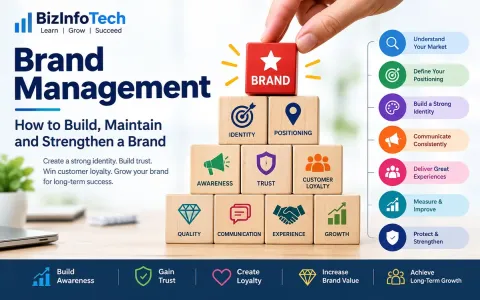
Brand Management: How to Build, Maintain and Strengthen a Brand
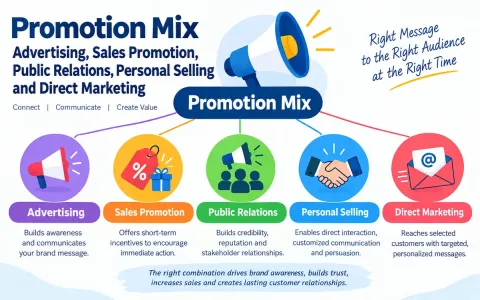
Promotion Mix: Advertising, Sales Promotion, PR, Personal Selling & Direct Marketing
Marketing Mix: The 4Ps of Marketing Explained With Examples
What Is Marketing Management? Definition, Importance, Functions and Process
Marketing Environment: Micro and Macro Factors That Influence Business Decisions
Market Segmentation: How Businesses Divide and Target Different Customer Groups
Target Market Selection: How to Choose the Right Customers
Positioning Strategy: How to Create a Strong Position in the Customer's Mind