Introduction
In today's competitive business environment, having a good product or service is not enough to guarantee business success. Businesses must understand their target customers, identify market opportunities, communicate their value effectively, and develop a systematic plan to achieve their marketing objectives. This is where a well-designed marketing strategy becomes essential.
A marketing strategy provides a long-term direction for attracting potential customers, building brand awareness, creating customer value, and achieving sustainable business growth. Whether you operate a small local business, an e-commerce store, a service-based company, or a large organization, an effective marketing strategy helps you use your resources efficiently and compete more successfully in the marketplace.
However, developing a marketing strategy involves more than advertising products on social media or offering discounts. It requires market research, customer segmentation, target market selection, positioning, competitive analysis, marketing mix decisions, and continuous performance evaluation.
In this article, we will explain what a marketing strategy is, why it matters, and how to develop an effective marketing strategy step by step.
What Is a Marketing Strategy?
A marketing strategy is a long-term, market-oriented plan through which an organization identifies its target customers, establishes a distinctive value proposition, and determines how it will create, communicate, and deliver value to achieve its marketing objectives.
It provides direction for important marketing decisions, including which customers to serve, how to differentiate the business from competitors, how to position its products or services, and how to build profitable customer relationships.
For example, a local clothing retailer may develop a marketing strategy focused on young adults who prefer affordable, fashionable clothing. The retailer might differentiate itself through competitive pricing, updated designs, local delivery, and personalized customer service.
Similarly, a website development company may target small businesses that need affordable, professional websites. Its strategy could emphasize customized website development, search engine optimization (SEO), mobile responsiveness, and ongoing technical support.
Both businesses use marketing strategies to focus their resources on a specific market and offer value that addresses customer needs.
Marketing Strategy vs. Marketing Tactics
Although the terms are closely related, marketing strategy and marketing tactics serve different purposes.
Marketing strategy explains the overall direction of marketing activities, including target customers, value proposition, differentiation, and positioning.
Marketing tactics are the specific actions used to implement that strategy, such as running advertisements, publishing blog posts, sending emails, and offering promotional discounts.
For example, targeting small businesses that need affordable digital solutions is a strategic decision. Publishing three SEO-focused blog posts per week is a marketing tactic.
An effective marketing plan connects the overall strategy with specific actions, budgets, timelines, and performance indicators.
Why Is an Effective Marketing Strategy Important?
A clearly defined marketing strategy helps businesses make informed decisions rather than relying on random promotional activities.
1. Identifies the Right Target Customers
Not every product or service is suitable for every customer. A marketing strategy helps businesses identify the customer groups most likely to benefit from their offerings.
By understanding customers' needs, preferences, purchasing power, and buying behaviour, businesses can develop more relevant products and marketing messages.
2. Creates Competitive Advantage
Customers often have several alternatives when purchasing a product or service. A business must explain why customers should choose it over competing alternatives.
Competitive advantage may come from superior quality, affordability, convenience, innovation, customer service, or specialization in a particular market segment.
3. Improves Marketing Resource Allocation
Small businesses often operate with limited budgets and personnel. A marketing strategy helps them prioritize channels and activities that are most relevant to their target customers.
Instead of spending money on every available advertising platform, a business can focus on the channels that offer the strongest potential to reach and convert its intended audience.
4. Builds Brand Awareness and Customer Trust
Consistent branding, useful content, reliable service, and transparent communication help businesses develop credibility.
Over time, customers may become more familiar with the brand and more confident about purchasing from it.
5. Supports Customer Acquisition and Retention
Marketing is not limited to attracting new customers. It also involves maintaining relationships with existing customers, encouraging repeat purchases, and increasing customer lifetime value.
Follow-up communication, loyalty programmes, after-sales service, and personalized offers can support customer retention.
6. Makes Marketing Performance Measurable
An effective strategy establishes objectives and performance indicators. Businesses can evaluate whether their marketing activities are generating website traffic, enquiries, qualified leads, sales, and profitable customer relationships.
This allows them to improve their decisions using evidence rather than assumptions.
How to Develop an Effective Marketing Strategy: 10 Essential Steps
Developing an effective marketing strategy requires a structured approach. The following ten steps provide a practical framework for businesses of different sizes.
Step 1: Conduct Market Research
Market research is the process of collecting and analysing information about customers, competitors, market conditions, and industry trends to support marketing decisions.
It is the foundation of an effective marketing strategy because businesses must understand the market before deciding how to compete in it.
Market research can help answer questions such as:
Who are the potential customers?
What problems do they want to solve?
What factors influence their purchasing decisions?
How much are they willing to pay?
Which competitors already serve the market?
What opportunities or unmet needs exist?
Businesses can collect information through customer interviews, surveys, website analytics, online reviews, competitor websites, industry reports, and sales records.
Market research generally uses two types of data:
Primary research: Information collected directly for a specific research purpose, such as customer surveys, interviews, or focus groups.
Secondary research: Information already collected by other organizations or researchers, such as industry publications, government statistics, market reports, and existing research studies.
For example, a small bakery planning to introduce home delivery could survey existing customers, analyse local competitors, and test customer interest in online ordering before investing in a delivery system.
The objective is to reduce uncertainty and identify opportunities that can guide strategic decisions.
Step 2: Analyse the Business Environment and Competitors
After conducting market research, a business should assess its internal capabilities and external market conditions.
A useful tool is SWOT analysis, which examines four dimensions:
Strengths: Internal capabilities that provide an advantage.
Weaknesses: Internal limitations that may restrict performance.
Opportunities: External developments that the business could exploit.
Threats: External conditions that may negatively affect the business.
For example, a small website development company might identify personalized service as a strength, limited brand recognition as a weakness, growing demand for e-commerce websites as an opportunity, and competition from low-cost website builders as a threat.
Competitor analysis should also examine competitors' product offerings, prices, target audiences, promotional methods, customer reviews, service quality, and market positioning.
The purpose is not simply to copy competitors. It is to identify gaps in the market and determine how the business can deliver distinctive value.
Step 3: Set SMART Marketing Objectives
A marketing strategy needs clear objectives to provide direction and make performance measurable.
SMART objectives are:
Specific: Clearly state what the business wants to achieve.
Measurable: Include a measurable indicator.
Achievable: Remain realistic given available resources.
Relevant: Support broader business goals.
Time-bound: Specify a deadline.
For example, instead of setting a vague objective such as "increase website traffic," a business could establish the following objective:
"Increase qualified organic website enquiries by 25% over the next six months."
This objective specifies the desired outcome, measurement, and time frame.
Marketing objectives may relate to:
Increasing brand awareness.
Generating qualified leads.
Increasing sales revenue.
Improving conversion rates.
Acquiring new customers.
Improving customer retention.
Increasing customer lifetime value.
Expanding into a new geographic market.
Objectives should be aligned with the organization's overall business goals and supported by an appropriate budget and implementation plan.
Step 4: Segment the Market
Market segmentation is the process of dividing a broad market into relatively distinct groups of customers who have similar needs, characteristics, or purchasing behaviour.
Segmentation enables businesses to understand differences between customers and design more relevant marketing strategies.
The four common bases of consumer market segmentation are:
1. Geographic segmentation: Dividing the market according to location, such as countries, states, cities, regions, or neighbourhoods.
2. Demographic segmentation: Dividing the market according to characteristics such as age, income, occupation, education, family size, or life stage.
3. Psychographic segmentation: Dividing the market according to lifestyle, interests, values, personality, or social orientation.
4. Behavioural segmentation: Dividing the market according to purchasing behaviour, product usage, benefits sought, brand loyalty, or purchase occasions.
For example, a fitness centre might segment its market into students, working professionals, senior citizens, and individuals seeking specialized fitness programmes.
Each segment may have different expectations regarding pricing, operating hours, facilities, and services.
Effective segmentation identifies groups that are sufficiently distinct and can be served in a commercially viable manner.
Step 5: Select the Target Market
Market targeting involves evaluating identified market segments and selecting one or more segments that the business intends to serve.
A business should assess segments according to their size, growth potential, profitability, accessibility, competitive intensity, and compatibility with its resources and capabilities.
There are four commonly discussed targeting approaches:
Undifferentiated marketing: The business serves a broad market with a relatively standardized offering.
Differentiated marketing: The business targets multiple segments with different offerings or marketing programmes.
Concentrated marketing: The business focuses its resources on one specific segment or niche.
Micromarketing: The business tailors its offerings or marketing activities to specific local markets or individual customers.
For instance, a small digital marketing agency with a limited budget might initially concentrate on schools, coaching centres, and local retailers in its geographic area rather than attempting to serve every industry.
This focused approach can help the agency develop relevant expertise, create industry-specific case studies, and use its resources more efficiently.
The best targeting strategy depends on the business's objectives, capabilities, market conditions, and available resources.
Step 6: Develop a Strong Value Proposition and Positioning Strategy
A value proposition explains the principal benefits a customer can expect from a product or service and why the offering is worth considering.
A positioning strategy determines how the business wants its brand or offering to be perceived in the minds of target customers relative to competing alternatives.
A strong value proposition should address three questions:
What customer problem does the business solve?
What important benefits does it provide?
Why should customers choose it over available alternatives?
For example, a website development company might use the following value proposition:
"We help small businesses establish a professional online presence through mobile-friendly websites, SEO-ready structures, and ongoing technical support at transparent prices."
This statement identifies the intended customer, describes the benefits, and communicates a point of differentiation.
Positioning may be based on quality, price, convenience, innovation, specialization, customer service, or a distinctive combination of benefits.
However, a business should make only those promises that it can consistently deliver. A positioning statement unsupported by actual performance can damage customer trust.
Step 7: Develop the Marketing Mix
The marketing mix consists of the controllable marketing variables that a business combines to influence customer demand and achieve its marketing objectives.
For many product-based businesses, the traditional marketing mix consists of the 4Ps: Product, Price, Place, and Promotion.
For service businesses, the expanded 7Ps framework adds People, Process, and Physical Evidence.
The 4Ps of Marketing
1. Product
A product is a good, service, or offering designed to satisfy customer needs or wants.
Marketing decisions include product features, quality, design, packaging, branding, product range, warranties, and after-sales support.
A business should ensure that its offering addresses the needs of the selected target market.
2. Price
Price is the amount of money customers pay to obtain a product or service.
Pricing decisions should consider production or service costs, customer willingness to pay, perceived value, competitor prices, demand conditions, and the business's profitability objectives.
Common pricing approaches include cost-based pricing, competition-based pricing, value-based pricing, penetration pricing, and price skimming.
3. Place
Place refers to the channels and arrangements through which a product or service is made available to customers.
It includes distribution channels, retail locations, e-commerce platforms, logistics, inventory management, and delivery arrangements.
For example, a business may sell through physical stores, its own website, online marketplaces, distributors, or a combination of channels.
4. Promotion
Promotion refers to marketing communication activities used to inform, persuade, and remind target customers about a product, service, or brand.
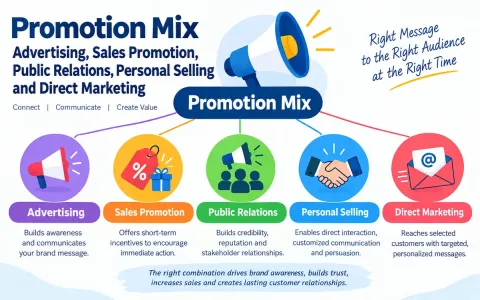
The promotion mix commonly includes advertising, sales promotion, personal selling, public relations, and direct or digital marketing.
The selection of promotional tools should depend on the target audience, communication objectives, budget, and nature of the offering.
The Additional 3Ps for Service Marketing
5. People
People include employees and other individuals who participate in service delivery or influence the customer experience.
Staff competence, communication, responsiveness, and professional behaviour can strongly influence customer satisfaction.
6. Process
Process refers to the procedures, systems, and activities through which a service is delivered.
Simple enquiry procedures, clear communication, efficient booking, timely delivery, and effective complaint resolution can improve service quality.
7. Physical Evidence
Physical evidence includes the tangible cues customers use to evaluate a service, particularly when the service itself is intangible.
Examples include a professional website, office appearance, staff uniforms, testimonials, certificates, service reports, and other credible indicators of quality.
The 7Ps should work together to support the chosen target market, value proposition, and positioning strategy.
Step 8: Choose the Right Marketing Channels
Marketing channels are the platforms and routes through which businesses communicate with target customers, distribute offerings, or facilitate transactions.
The appropriate channels depend on customer behaviour, the type of offering, marketing objectives, available resources, and the stage of the customer journey.
Important marketing channels include the following.
Search Engine Optimization (SEO): SEO helps a business improve its visibility in organic search results. Useful website content, technically sound pages, relevant internal links, and a clear site structure can support long-term organic visibility.
Content Marketing: Businesses create useful articles, guides, videos, case studies, and other resources to educate audiences, demonstrate expertise, and support customer decision-making.
Social Media Marketing: Platforms such as LinkedIn, Facebook, Instagram, and YouTube can help businesses distribute content, develop communities, communicate with customers, and generate enquiries.
Email Marketing: Email enables businesses to share useful information, nurture leads, announce offers, and maintain relationships with customers who have agreed to receive communications.
Paid Advertising: Search advertisements and social media advertisements can help businesses reach selected audiences and test marketing messages. Performance should be evaluated against campaign costs and business outcomes.
Referral Marketing: Recommendations from satisfied customers, professional partners, and existing business networks can generate new opportunities.
Personal Selling: Direct interaction between sales representatives and prospective customers is particularly important for complex, high-value, or business-to-business offerings.
Businesses do not need to use every channel simultaneously. It is often more effective to select a manageable combination of channels and improve their performance over time.
For example, a local website development company could combine SEO articles, LinkedIn networking, local business outreach, customer referrals, and WhatsApp follow-ups. A consumer brand targeting younger audiences might place greater emphasis on short-form video, social media, and e-commerce platforms.
The key is to select channels according to customer preferences rather than following every new marketing trend.
Step 9: Prepare a Marketing Action Plan and Budget
A marketing strategy provides direction, but implementation requires a practical action plan.
The action plan should translate strategic decisions into specific activities, responsibilities, deadlines, resource requirements, and performance indicators.
A simple marketing action plan may include the following elements:
| Marketing activity | Objective | Timeline | Performance indicator |
|---|---|---|---|
| Publish SEO-focused articles | Increase organic visibility | Monthly | Organic clicks and qualified enquiries |
| Run targeted advertising | Generate leads | Campaign-based | Cost per qualified lead |
| Share educational social content | Build awareness and engagement | Weekly | Reach, engagement, and website visits |
| Contact potential business clients | Generate sales opportunities | Weekly | Qualified meetings and proposals |
| Follow up with existing customers | Improve retention | Monthly or as appropriate | Repeat purchases and retention rate |
The budget should reflect the organization's financial capacity and marketing priorities.
Possible expenses include advertising, content creation, website maintenance, marketing software, employee training, research, and promotional materials.
A small business can begin with low-cost activities such as customer interviews, useful content, referrals, and direct outreach before expanding into paid campaigns.
However, low-cost marketing should not be confused with cost-free marketing. Time, expertise, tools, and implementation all require resources.
Step 10: Measure Performance and Improve the Strategy
An effective marketing strategy is not a one-time document. It must be monitored and adjusted as customer behaviour, competition, and market conditions change.
Businesses should establish key performance indicators (KPIs) that correspond to their objectives.
Important marketing KPIs include:
Website traffic: The number of visits or sessions generated by a website.
Conversion rate: The percentage of relevant visitors or users who complete a defined action.
Lead generation: The number of prospective customers who express interest in the business's offering.
Customer acquisition cost (CAC): The cost associated with acquiring a new customer, calculated using a clearly defined set of acquisition expenses and customers.
Return on marketing investment (ROMI): A measure of the financial return attributable to marketing relative to the marketing investment. The calculation should specify whether it uses incremental profit, contribution, or revenue.
Customer retention rate: The proportion of existing customers retained during a specified period, using a consistent definition of the customer base.
Customer lifetime value (CLV): An estimate of the economic value a customer generates over the duration of the relationship.
For example, if a business spends ₹20,000 on a marketing campaign and acquires 20 new customers, its campaign expenditure per acquired customer is ₹1,000, assuming all 20 customers are attributable to that campaign.
This figure alone does not establish whether the campaign is profitable. The business must also consider customer revenue, contribution margin, retention, and other relevant costs.
Regular performance reviews help businesses identify effective activities, eliminate wasteful spending, and improve their marketing decisions.
A Practical Example: Developing a Marketing Strategy for a Small Business
Consider a small website development company that wants to increase its customer base among local businesses.
The company offers website design, website development, basic SEO implementation, and maintenance services. However, it faces strong competition from freelancers, agencies, and do-it-yourself website builders.
The company could develop the following marketing strategy.
1. Market research: Interview local retailers, coaching centres, schools, and service providers to identify their website-related problems, budget constraints, and expectations.
2. SWOT analysis: Identify technical expertise and personalized service as strengths, limited brand recognition as a weakness, growing online business adoption as an opportunity, and intense price competition as a threat.
3. Marketing objective: Set a measurable target, such as acquiring 15 qualified business enquiries per month within six months.
4. Segmentation: Group potential customers by industry, business size, location, and digital maturity.
5. Target market: Initially focus on local service businesses and retailers that need professional websites and basic digital visibility.
6. Value proposition: Communicate the benefits of mobile-friendly websites, clear pricing, SEO-ready structures, and reliable support.
7. Marketing mix: Offer suitable website packages, transparent pricing, convenient online consultations, relevant promotional content, professional customer service, and a clear development process.
8. Marketing channels: Publish helpful SEO articles, share project examples on social media, contact potential clients, develop referral partnerships, and follow up with enquiries.
9. Budget and action plan: Allocate time and money to content production, website improvements, local outreach, and selected paid campaigns where appropriate.
10. Performance evaluation: Monitor qualified leads, proposals, conversion rate, acquisition cost, revenue, and customer satisfaction.
The company should review its results regularly and adjust the strategy according to evidence. If articles generate traffic but few enquiries, for example, it may need to improve the relevance of its content, service pages, calls to action, or lead qualification process.
This example demonstrates that a marketing strategy connects market understanding, customer value, channel selection, implementation, and performance measurement.
Common Marketing Strategy Mistakes to Avoid
Even businesses with good products and motivated teams can struggle when their marketing decisions lack strategic direction.
The following mistakes should be avoided.
1. Targeting everyone: Attempting to serve every customer can weaken differentiation and waste resources. Businesses should identify the segments that best fit their capabilities and objectives.
2. Ignoring market research: Decisions based only on personal assumptions may fail to reflect actual customer needs. Research and customer feedback should inform strategic choices.
3. Focusing only on promotion: Advertising cannot compensate indefinitely for poor product quality, unclear pricing, weak service, or an unsuitable offering.
4. Copying competitors: Competitor analysis should identify opportunities for differentiation, not encourage imitation without considering the business's own strengths.
5. Setting vague objectives: Goals such as "become popular" or "increase sales" are difficult to manage without measurable indicators and deadlines.
6. Using too many marketing channels: Spreading limited resources across numerous platforms can reduce the quality and consistency of execution. Channel selection should reflect customer behaviour and business priorities.
7. Ignoring customer retention: Acquiring customers without maintaining relationships can limit long-term profitability. Businesses should consider repeat purchases, satisfaction, and customer lifetime value.
8. Failing to measure results: Without appropriate performance indicators, it is difficult to determine which activities contribute to business outcomes.
9. Making unsupported claims: Promises about guaranteed rankings, sales, or business growth can damage credibility when they are not supported by realistic evidence.
10. Treating the strategy as permanent: Market conditions change. Businesses should review their assumptions and update their plans when performance or market evidence indicates a need for change.
How Digital Marketing Supports an Effective Marketing Strategy
Digital marketing has expanded the ways businesses can reach customers, communicate value, and measure results. It should be treated as part of the overall marketing strategy rather than as a separate substitute for strategic planning.
Digital channels support marketing in several important ways.
Audience research: Search queries, customer feedback, website analytics, and campaign results can reveal customer interests and information needs.
Targeted communication: Businesses can adapt messages to specific customer segments and stages of the buying journey.
Content distribution: Blogs, videos, email, and social media help businesses share information and demonstrate expertise.
Lead generation: Landing pages, enquiry forms, calls to action, and targeted campaigns can encourage prospective customers to make contact.
Performance measurement: Analytics tools help businesses assess traffic sources, engagement, conversion, and campaign performance.
Customer relationship management: CRM systems can help organize enquiries, record interactions, track sales opportunities, and maintain customer relationships.
For small businesses, a combination of useful content, search visibility, customer referrals, direct communication, and carefully measured advertising can provide a practical starting point.
Nevertheless, digital activity should be aligned with the target market, business objectives, customer value proposition, and available resources.
Conclusion
Developing an effective marketing strategy requires a clear understanding of the market, customers, competitors, and the organization's own capabilities. It involves setting measurable objectives, segmenting the market, selecting appropriate target customers, establishing a distinctive value proposition, developing the marketing mix, choosing relevant channels, allocating resources, and evaluating performance.
A successful marketing strategy is not simply about increasing advertising activity or attracting more visitors. It is about creating and communicating customer value in a way that supports customer satisfaction and sustainable business performance.
For small businesses, the best starting point is often a focused target market, a clear value proposition, a manageable set of marketing channels, and measurable objectives. By learning from customer feedback and regularly reviewing results, businesses can improve their marketing decisions and build stronger customer relationships over time.
At BizInfoTech, we believe that combining sound business principles with appropriate digital tools can help organizations strengthen their online presence, improve customer engagement, and pursue sustainable growth.
Frequently Asked Questions (FAQs)
1. What is a marketing strategy in simple terms?
A marketing strategy is a long-term plan that explains which customers a business wants to serve, what value it will offer them, how it will differentiate itself from competitors, and how it will achieve its marketing objectives.
2. What are the main steps in developing a marketing strategy?
The main steps are conducting market research, analysing the business environment and competitors, setting SMART objectives, segmenting the market, selecting a target market, developing a value proposition and positioning strategy, designing the marketing mix, selecting marketing channels, preparing an action plan and budget, and measuring performance.
3. What is the difference between marketing strategy and marketing plan?
A marketing strategy establishes the overall direction for reaching and serving target customers. A marketing plan translates that direction into specific activities, schedules, budgets, responsibilities, and performance measures.
4. What are the 4Ps of marketing?
The 4Ps are Product, Price, Place, and Promotion. They represent key marketing decisions relating to the offering, its price, its availability, and its communication to customers.
5. What are the 7Ps of marketing?
The 7Ps are Product, Price, Place, Promotion, People, Process, and Physical Evidence. The additional three Ps are particularly useful when developing strategies for service businesses.
6. What is the role of market research in marketing strategy?
Market research provides information about customers, competitors, market trends, and unmet needs. It helps businesses make informed decisions about target markets, positioning, pricing, product development, and promotional activities.
7. Which marketing strategy is best for a small business?
The most suitable strategy depends on the business, target customers, competitive environment, and budget. Many small businesses can begin by focusing on a specific customer segment, developing a clear value proposition, building a credible online presence, generating referrals, and measuring qualified enquiries and sales.
8. How can a business measure the effectiveness of its marketing strategy?
A business can track relevant KPIs such as qualified leads, conversion rate, customer acquisition cost, sales revenue, marketing return, customer retention, and customer lifetime value. The selected measures should correspond to clearly defined marketing objectives.
9. How often should a marketing strategy be reviewed?
Businesses should monitor performance regularly and conduct formal reviews at intervals appropriate to their market and campaign cycles. A monthly review may be useful for operational KPIs, while major strategic assumptions may be reviewed quarterly or when significant market changes occur.
10. Can digital marketing replace a traditional marketing strategy?
No. Digital marketing provides channels and tools for reaching customers, but it does not replace the need for market research, target market selection, positioning, customer value creation, and strategic planning. Digital and traditional channels can be combined when they support the business's objectives.
Related topics:
What Is Marketing Management? Definition, Importance, Functions and Process
Marketing Environment: Micro and Macro Factors That Influence Business Decisions
Market Segmentation: How Businesses Divide and Target Different Customer Groups
Target Market Selection: How to Choose the Right Customers
Positioning Strategy: How to Create a Strong Position in the Customer's Mind
Consumer Behaviour: Understanding How Customers Make Buying Decisions
Marketing Mix: The 4Ps of Marketing Explained With Examples
Product Life Cycle: Stages, Strategies and Marketing Implications
Pricing Strategy: Methods, Objectives & Factors Influencing Pricing Decisions
Promotion Mix: Advertising, Sales Promotion, PR, Personal Selling & Direct Marketing
Brand Management: How to Build, Maintain and Strengthen a Brand
Customer Relationship Management (CRM): Strategies for Long-Term Relationships