Introduction
Artificial Intelligence is becoming part of everyday digital life. AI-powered applications can recommend content, analyze customer behavior, assist with recruitment, generate text and images, provide customer support, and help organizations make decisions.
Many of these applications depend on data.
Some of that data may be personal information such as names, contact details, locations, purchasing behavior, photographs, employment information, online activity, or other information associated with an identifiable individual.
This creates an important question:
What happens to personal data when it is collected, processed, analyzed, or generated by an AI system?
AI can create significant benefits, but it can also introduce or amplify privacy risks. NIST notes that Generative AI systems may involve large volumes of training data, potentially including personal information, and that models can sometimes leak, generate, or infer sensitive information about individuals.
Therefore, understanding AI and personal data privacy is becoming important not only for technology professionals but also for ordinary users, businesses, educators, researchers, and organizations adopting AI tools.
This article examines the major privacy risks associated with AI and provides practical approaches for protecting personal information.
What Is Personal Data?
Personal data generally refers to information that relates to an identified or identifiable individual.
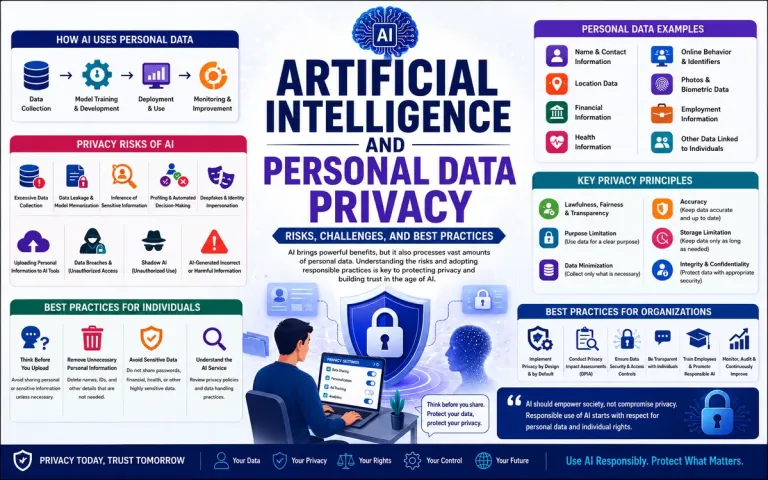
Depending on the applicable law and context, this may include information such as:
Name
Email address
Telephone number
Home or workplace address
Identification information
Location data
Photographs
Online identifiers
Employment information
Financial information
Health-related information
Biometric information
Behavioral information
Not all information has the same level of sensitivity. Some categories of personal information can create significantly greater risks if exposed, misused, or incorrectly processed.
The exact legal definition of personal data varies by jurisdiction, so organizations should consider the laws applicable to their activities.
Why Does AI Need Personal Data?
AI systems can use data at several stages of their lifecycle.
Personal information may be involved during:
Data collection
Model development and training
Testing and evaluation
Deployment
User interaction
Monitoring and improvement
For example, an AI-powered customer service system may process customer messages.
An AI recruitment system may process information contained in applications.
A recommendation system may analyze user behavior.
A healthcare-related AI application may process highly sensitive information.
The important point is that privacy considerations do not begin and end when an AI model is trained. Personal data can be involved throughout the AI lifecycle. The UK's Information Commissioner's Office (ICO) specifically notes that data protection considerations can apply to personal data contained in training data, used during deployment, or potentially contained within the model itself.
How AI Can Create Privacy Risks
AI does not necessarily create entirely new privacy problems. Instead, it can sometimes make existing privacy and security challenges more difficult to manage.
The scale, complexity, automation, and analytical capabilities of AI can increase the potential impact of inappropriate data processing.
Here are some of the major risks.
1. Excessive Data Collection
One of the most basic privacy risks is collecting more personal information than is actually required.
An organization may collect extensive information because it believes the data could become useful for future AI applications.
However, collecting unnecessary information increases the potential consequences of:
Data breaches
Unauthorized access
Misuse
Accidental exposure
Incorrect processing
A better approach is to ask:
What data is actually necessary for this AI application to perform its intended purpose?
Data minimization is an important principle in privacy-aware AI development. The ICO specifically highlights the challenge of applying data minimization to AI systems.
2. Uploading Personal Information to AI Tools
This is one of the most relevant risks for everyday AI users.
Consider an employee who uploads a document containing:
Customer information
Employee records
Financial details
Confidential business information
Personal identification information
to an external AI service.
The user may simply want the AI to summarize the document.
However, before doing so, the user should understand:
What information is being shared?
Who operates the AI service?
How is the information processed?
What privacy controls are available?
Is the information retained?
What organizational policies apply?
The safest approach is not to assume that an AI tool should automatically receive any information simply because it can process it.
3. AI Model Memorization and Data Leakage
Large AI models are trained using substantial quantities of data.
One privacy concern is that models may sometimes retain or reproduce information associated with their training data.
NIST identifies data memorization as a potential privacy risk in Generative AI. In some circumstances, models may reveal sensitive information that appeared in training data.
This does not mean that an AI model simply stores every training document like a conventional database.
Rather, the concern is that some information or patterns may be represented within the trained model and potentially exposed under certain circumstances.
This is one reason why privacy-preserving approaches and careful management of training data are important.
4. AI Can Infer Information
Perhaps one of the most interesting privacy risks is that AI does not necessarily need someone to directly provide a piece of personal information.
AI systems can potentially infer information from other data.
For example, a system may analyze multiple pieces of seemingly harmless information and identify patterns that reveal something about an individual.
NIST notes that Generative AI systems may potentially infer personal or sensitive information by combining information from different sources.
This creates an important distinction:
Data disclosure means information is directly provided or exposed.
Data inference means information is derived from other available information.
The second can be much harder for individuals to recognize.
5. Profiling and Automated Decision-Making
AI can analyze large amounts of information to identify patterns about individuals or groups.
Organizations may use AI for activities such as:
Recruitment
Credit assessment
Customer segmentation
Fraud detection
Advertising
Risk assessment
Recommendations
These systems can create profiles or predictions about individuals.
The privacy concern becomes more serious when such predictions influence decisions that significantly affect a person.
For example, an automated system might influence whether someone:
Receives an offer
Gets access to a service
Is flagged for additional review
Receives a particular recommendation
The ICO highlights the importance of individual rights and meaningful human oversight where AI is involved in solely automated decisions with legal or similarly significant effects.
6. Data Breaches and Unauthorized Access
AI systems can involve large datasets and multiple components.
Data may move between:
Internal systems
AI applications
Cloud infrastructure
Databases
Third-party providers
Development environments
Every additional connection can create another point that needs appropriate security controls.
The ICO notes that machine-learning systems can require personal data to be copied, transferred, stored, and shared across different locations and sometimes with third parties, making the information more difficult to track and manage.
Therefore, AI security cannot be separated from data privacy.
7. Shadow AI
Another emerging organizational problem is Shadow AI.
This occurs when employees use AI tools for work without formal approval or organizational oversight.
For example, an employee might use a public AI service to:
Summarize customer information
Rewrite an internal document
Analyze a spreadsheet
Review source code
Draft a confidential report
The employee may have good intentions, but the organization may not know what information has been shared with external services.
This can create significant privacy, security, compliance, and intellectual-property risks.
Organizations should therefore establish clear policies explaining:
Which AI tools employees may use
What information may be entered
What information must never be entered
How sensitive information should be handled
When human review is required
8. AI-Generated Personal Information
AI creates another interesting privacy challenge: it can generate information about people that may not be accurate.
For example, an AI system might generate an incorrect statement about an individual.
This becomes particularly problematic when generated information is presented as fact.
Incorrect AI-generated information can potentially affect:
Reputation
Employment
Financial decisions
Personal relationships
Professional opportunities
Therefore, privacy and accuracy are sometimes closely connected.
Protecting personal information is not only about preventing unauthorized disclosure. It also involves considering how personal information is generated, inferred, interpreted, and used.
9. Deepfakes and Identity-Related Risks
Generative AI can create realistic synthetic images, audio, and video.
This creates new risks involving:
Identity impersonation
Fraud
Reputation
Non-consensual synthetic content
Social engineering
For example, a realistic synthetic voice may be used to impersonate another person.
A manipulated image may be presented as genuine.
These developments demonstrate that AI-related privacy concerns extend beyond databases and passwords. Personal identity itself can become part of the risk environment.
Privacy vs Security: What Is the Difference?
Privacy and security are closely related but not identical.
Data security focuses on protecting information against unauthorized access, loss, alteration, destruction, or other security threats.
Data privacy focuses more broadly on how personal information is collected, used, shared, retained, and processed in ways that respect individuals' rights and expectations.
For example:
A company may have excellent cybersecurity but still collect excessive personal information for an unnecessary purpose.
That could be a privacy problem even if there is no security breach.
Conversely, an organization may have a legitimate reason to process information but fail to protect it properly.
That could be a security problem.
Effective AI governance therefore needs to consider both.
Best Practices for Individuals Using AI
Individuals can take several practical steps to reduce privacy risks.
1. Think Before You Upload
Before entering information into an AI tool, ask:
Would I be comfortable sharing this information with an external service?
If the answer is no, do not upload it unless you have a clear, authorized and appropriately protected reason to do so.
2. Remove Unnecessary Personal Information
If an AI system only needs the content of a document, remove unnecessary names, identification numbers, contact details, or other personal information where practical.
For example, instead of:
"Rahul Sharma, employee ID 58291, working at..."
use:
"Employee A..."
when the identity is not relevant to the task.
3. Avoid Sensitive Information
Be particularly cautious with:
Passwords
Bank information
Government identification numbers
Medical information
Private photographs
Confidential business information
Authentication credentials
4. Understand the AI Service
Before using an AI platform for important or sensitive work, review its privacy and data-handling information.
Look for information about:
Data retention
Data usage
Account controls
Security measures
Enterprise privacy options
Data deletion
Third-party processing
5. Verify AI-Generated Information
Privacy protection also requires attention to incorrect information.
If an AI system generates information about a person, verify important claims before using or sharing them.
Best Practices for Businesses
Organizations adopting AI need a more systematic approach.
1. Establish an AI Usage Policy
A clear AI policy should explain:
Which tools employees can use
Which data can be entered
Which data is prohibited
How AI outputs should be reviewed
Who is responsible for AI governance
2. Apply Data Minimization
Collect and process only the personal information that is necessary for the intended purpose.
The ICO recommends considering data minimization and privacy-preserving techniques when developing and deploying AI systems.
3. Conduct Privacy Risk Assessments
Before deploying a high-risk AI system, organizations should identify potential impacts on individuals and determine appropriate safeguards.
A Data Protection Impact Assessment (DPIA) can be an important tool where applicable. The ICO recommends DPIAs as a way to identify and minimize privacy risks associated with AI processing.
4. Control Access to Data
Organizations should ensure that employees and systems only have access to the information they actually need.
Appropriate measures may include:
Access controls
Authentication
Encryption
Logging
Monitoring
Data segregation
The exact controls should reflect the sensitivity and risk of the processing.
5. Maintain Data Inventories and Audit Trails
Organizations should understand:
What data is being used → Where it is stored → Who can access it → How it moves → Why it is processed → When it should be deleted
The ICO recommends documenting the movement and storage of personal data used in machine-learning systems and maintaining appropriate audit trails.
6. Be Transparent
People should be informed about relevant uses of their personal data.
Transparency should address matters such as:
Why information is being collected
How it will be used
How long it will be retained
Whether it will be shared
The ICO specifically highlights these elements when explaining transparency requirements for AI systems processing personal data.
7. Build Privacy Into AI Systems
Privacy should not be treated as an issue to solve only after an AI system has been developed.
A better approach is privacy by design and by default.
This means considering privacy during:
Planning
Data collection
Model development
Testing
Deployment
Monitoring
System retirement
The ICO recommends considering data protection by design and by default when AI systems process personal data.
Privacy-Preserving AI Techniques
Organizations can also consider technical approaches designed to reduce privacy risks.
Depending on the use case, these may include:
Data Anonymization
Removing or transforming identifying information so that individuals are less readily identifiable.
Pseudonymization
Replacing direct identifiers with alternative identifiers while maintaining the ability to associate records under controlled conditions.
Data Minimization
Using only the information necessary for the intended purpose.
Access Controls
Limiting who or what can access sensitive information.
Encryption
Protecting data while it is stored or transmitted.
Privacy-Enhancing Technologies
Depending on the use case, organizations may consider techniques designed to reduce exposure of personal information during data processing.
The appropriate technique depends on the type of AI system, the data involved, the threat model, and the applicable legal and organizational requirements.
A Simple Privacy Checklist for AI Users
Before entering personal or confidential information into an AI system, ask:
Do I need to provide this information?
Is the information personal or sensitive?
Who operates the AI service?
What happens to the information after submission?
Is the use authorized by my organization?
Can unnecessary identifying information be removed?
Could the AI generate or infer sensitive information?
Does the final output need human verification?
If you cannot answer these questions, it may be better to stop and understand the data-handling process before proceeding.
The Future of AI and Personal Privacy
As AI systems become more capable, privacy challenges are likely to evolve.
Future AI systems may increasingly combine:
Personal data
Behavioral information
Location information
Digital identities
Public information
Organizational data
Real-time information
AI agents and other increasingly autonomous systems may also process information across multiple applications and services.
This makes privacy governance even more important.
Organizations will need to think not only about:
What data does the AI system receive?
but also:
What can the system infer, who can access those inferences, and how might the information be used?
NIST's Privacy Framework is designed to help organizations identify and manage privacy risks associated with data processing, including risks arising from AI systems.
Conclusion
Artificial Intelligence can provide enormous benefits, but those benefits increasingly depend on the collection and processing of data.
Personal data may be involved throughout the AI lifecycle—from training and testing to deployment and everyday interaction.
The major privacy risks include:
Excessive data collection
Unauthorized disclosure
Data leakage
Model memorization
Inference of sensitive information
Profiling
Automated decision-making
Shadow AI
Deepfakes and identity-related risks
The solution is not necessarily to avoid AI.
Instead, AI should be developed and used with privacy, security, transparency, data minimization, appropriate governance, and human oversight in mind.
For individuals, the most important habit is simple:
Do not provide an AI system with personal or confidential information unless you understand why it is needed and how it will be handled.
For organizations, privacy should become part of the AI lifecycle rather than an afterthought.
As AI becomes more deeply integrated into business and everyday life, trust will depend not only on what AI can do, but also on how responsibly it handles information about people.
Related articles:-
Artificial Intelligence: A Complete Guide to AI
How Does Artificial Intelligence Work?
Machine Learning vs Artificial Intelligence
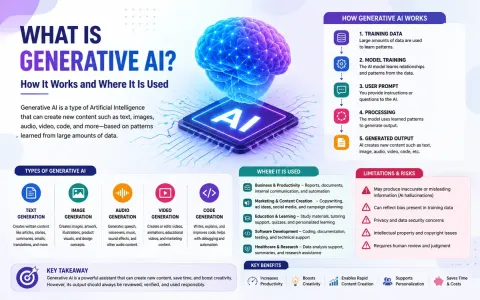
What Is Generative AI? How It Works
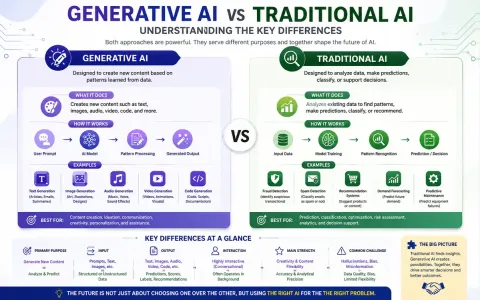
Generative AI vs Traditional AI
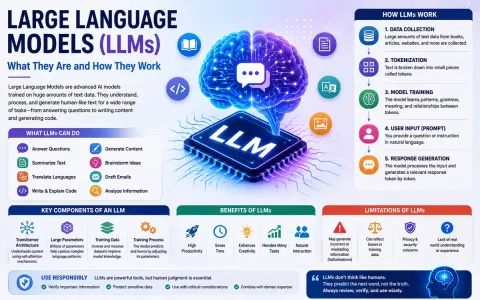
Large Language Models (LLMs): What They Are and How They Work
Frequently Asked Questions
Can AI access my personal data?
AI systems can process personal data when it is provided to them or when the system has been designed and authorized to access relevant data sources. The exact handling depends on the particular AI service, application, configuration, and applicable policies.
Is it safe to upload personal information to AI tools?
Not automatically. Users should understand the AI service's data-handling practices and organizational policies before submitting personal or confidential information.
Can AI reveal personal information?
AI systems can potentially reveal, reproduce, or infer personal or sensitive information under certain circumstances. NIST identifies such risks as an important privacy concern for Generative AI.
What is data minimization in AI?
Data minimization means limiting the collection and processing of personal information to what is necessary for the intended purpose.
What is privacy by design?
Privacy by design means incorporating privacy protections into the planning, development, deployment, and operation of a system rather than trying to add them after the system has been created.
Can AI infer sensitive information?
Yes. AI systems can potentially derive information about individuals by analyzing and combining different pieces of information. Such inferences may themselves create privacy risks.
What should businesses do before using AI with personal data?
Businesses should identify the purpose of processing, assess privacy and security risks, minimize unnecessary data, establish appropriate safeguards, define responsibilities, provide appropriate transparency, and conduct a DPIA where required or appropriate.
References
National Institute of Standards and Technology (NIST).
Artificial Intelligence Risk Management Framework: Generative AI Profile.
NIST Publications
Information Commissioner's Office (ICO).
Guidance on AI and Data Protection.
ICO Guidance
National Institute of Standards and Technology (NIST).
Privacy Framework.
NIST Privacy Framework