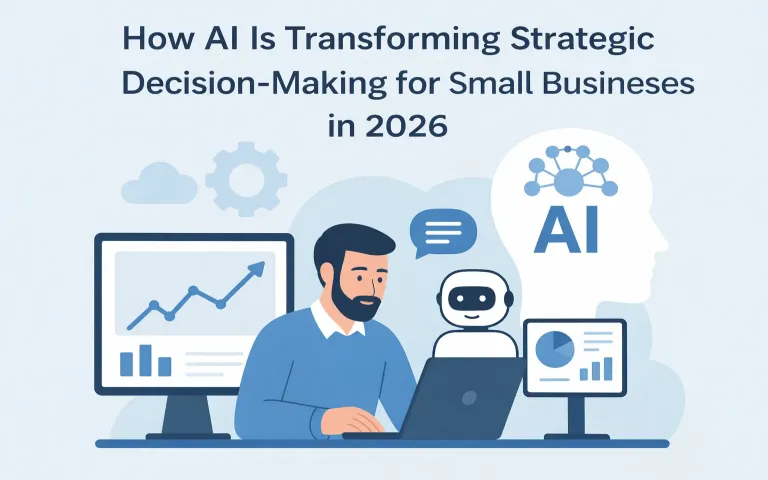
In 2026, artificial intelligence (AI) is no longer a luxury reserved for large corporations. Small businesses are increasingly using AI to improve strategic decision-making, reduce uncertainty, and compete effectively in fast-changing markets. AI-powered insights are helping owners move from intuition-based decisions to data-driven strategies.
Why Strategic Decision-Making Matters More in 2026
Market volatility, rising competition, and digital disruption have made traditional decision-making slower and riskier. Small businesses must respond quickly to changes in customer demand, pricing, supply chains, and technology adoption.
- Shorter product life cycles and faster market shifts
- Growing customer expectations for personalization
- Pressure to optimize costs and margins
- Increased availability of business data
Key Ways AI Is Transforming Strategic Decisions
1. Predictive Analytics for Better Forecasting
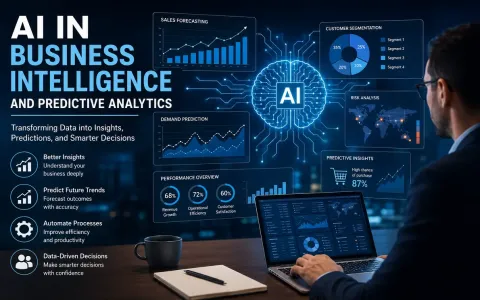
AI analyzes historical data, market trends, and external signals to predict future outcomes. This enables small businesses to plan inventory, staffing, and investments more accurately.
- Sales and demand forecasting
- Customer churn prediction
- Seasonal trend analysis
2. Scenario Planning and What-If Analysis
AI tools allow business owners to test multiple scenarios before making strategic choices. Pricing changes, marketing spend adjustments, or supplier switches can be simulated without real-world risk.
- Pricing strategy simulations
- Marketing budget optimization
- Operational cost impact analysis
3. AI-Powered Decision Support Systems
Modern AI systems act as decision-support assistants by summarizing data, highlighting risks, and recommending strategic actions. These systems do not replace managers but enhance their judgment.
- Automated strategic insights
- Data-driven recommendations
- Real-time performance alerts
4. Agentic AI for Strategic Execution
In 2026, agentic AI systems can perform multi-step strategic tasks under human supervision. These systems collect data, analyze competitors, and prepare action plans, significantly reducing planning time.
- Automated market research
- Competitor monitoring
- Strategic report generation
- Related reading: Why Every Small Business Needs an AI Strategy in 2026
Practical Use Cases for Small Businesses
Marketing Strategy
- Identifying high-performing customer segments
- Optimizing ad spend across channels
- Personalizing campaigns using AI insights
- Discover guide to Marketing in 2026: The Complete Guide to Growing Your Business in a Digital-First World
- and:- What Is SEO? A Complete Guide to Search Engine Optimization for Beginners
Operations and Supply Chain
- Demand-driven inventory planning
- Supplier performance evaluation
- Cost optimization through AI forecasting
Financial Strategy
- Cash flow forecasting
- Expense pattern analysis
- Investment and expansion decision support
How Small Businesses Can Start Using AI in 2026
Step 1: Identify High-Impact Decisions
- Pricing
- Inventory levels
- Customer acquisition strategy
Step 2: Start with Affordable AI Tools
- AI analytics dashboards
- CRM systems with AI insights
- AI-powered financial planning tools
Step 3: Keep Humans in the Loop
- Validate AI recommendations
- Combine AI insights with business experience
- Review outcomes regularly
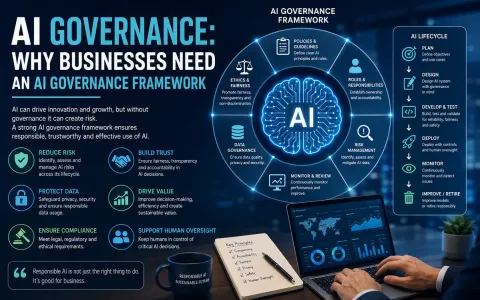
Risks and Governance in AI-Based Decision-Making
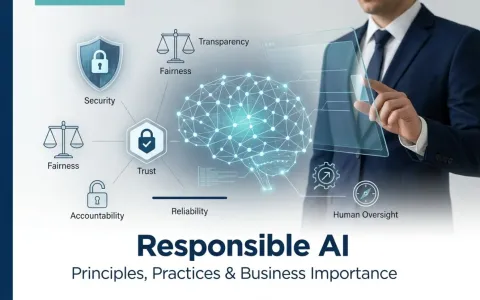
While AI offers powerful advantages, responsible use is essential.
- Data quality issues can lead to poor decisions
- Over-reliance on automation may reduce human judgment
- Privacy and data security must be ensured
Conclusion
In 2026, AI is transforming strategic decision-making for small businesses by making advanced analytics, forecasting, and planning accessible and affordable. Businesses that adopt AI thoughtfully—combining technology with human insight—will gain agility, resilience, and long-term competitive advantage.
Related Article: How Generative AI is Transforming Digital Marketing Strategies